Propagation
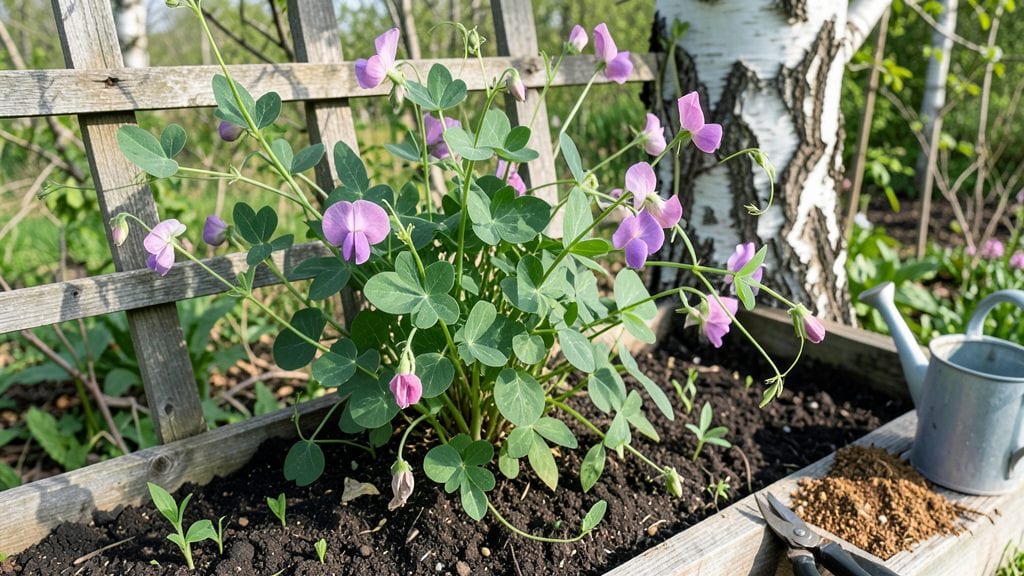
Old seeds can still germinate if stored properly and tested for viability, though their success rate declines over time. Use the paper towel method or cold stratification to revive dormant seeds, and plant them in well-draining soil with proper moisture and warmth.
Seed viability doesn't vanish overnight—it fades gradually due to cellular damage and moisture loss over months or years. 🔥 The good news? Many stored seeds retain some ability to sprout, especially if kept in cool, dry conditions like a sealed container in the fridge.
I’ve successfully revived decade-old tomato seeds using cold stratification, where seeds soak in damp paper towels for weeks to mimic winter’s natural dormancy-breaking process. Even heirloom varieties often surprise gardeners with renewed vigor when given the right conditions.
For best results, test a small batch first—planting entire seed packets blindly can lead to disappointment. The key lies in balancing patience with proper technique; rushing the process (like over-soaking seeds) can actually reduce germination rates further.
Always pair revival methods with fresh planting medium and consistent warmth to maximize your chances.
💡 In This Article
- How Seed Viability Declines Over Time
- Best Revival Methods for Dormant Seeds
How seed viability declines over time
The biological clock of seeds ticks relentlessly through a process called aging, where cellular structures degrade at a molecular level. Inside every seed, enzymes like lipases and proteases gradually break down essential fats and proteins that fuel germination.
At the same time, the seed's membrane integrity weakens—think of it like a balloon losing air—making it harder for water and nutrients to move where they need to go when planting time arrives.
This degradation accelerates when seeds lose their moisture equilibrium, typically around 5-10% moisture content for most varieties.
Temperature is the silent accelerator of this process. Seeds stored at 70°F (21°C) or higher lose viability 10 times faster than those kept at 32-41°F (0-5°C), the ideal range for long-term storage.
Oxygen plays a sneaky role too—while seeds need oxygen to respire, too much exposure (like in poorly sealed containers) speeds up oxidative damage to cell membranes.
Even humidity matters: 40-50% relative humidity preserves seeds best, while higher levels encourage mold growth that can physically block germination pathways. 🌱 The seed coat's thickness also determines how well it protects internal structures—thick coats (like those on sunflower seeds) offer better insulation against aging than thin ones (like lettuce seeds).
Here's what's actually happening on a cellular level: The radicle (embryonic root) and plumule (shoot) become less responsive to germination signals like light and moisture.
Studies show that after 5 years of storage, many seeds experience a 50% drop in germination rate, and after 10 years, some varieties may fall below 10% viability.
The damage isn't uniform—some seeds in a packet may still sprout while others fail, creating that frustrating "hit or miss" pattern gardeners notice.
Seed coat permeability changes dramatically with age too. Young seeds absorb water rapidly, but aged coats develop microscopic cracks that either fail to open properly or let in too much water too quickly—both scenarios can drown the embryo.
This is why scarification (lightly nicking the seed coat) sometimes works wonders on old seeds: it mimics natural weathering that would have occurred over time in the wild. The trade-off is delicate—too much damage and you risk exposing the embryo to pathogens.
Consider this comparison: A tomato seed stored at 35°F (2°C) with 5% moisture might retain 80% viability after 5 years, while the same seed stored at 75°F (24°C) could drop to 10% viability in just 2 years.
The difference comes down to how quickly enzymes degrade cellular components and how much the seed's protective mechanisms remain intact. Even the seed's genetic makeup plays a role—some species (like beans) age faster than others (like peas) due to inherent metabolic differences.
What most people don't realize is that seed dormancy isn't just about age—it's a survival strategy that gets weaker over time. Young seeds enter dormancy easily, but aged seeds may skip this protective phase entirely, making them more sensitive to environmental stresses.
This is why revival methods like cold stratification work better on older seeds—they help "reset" the internal clocks that have been ticking down for years.
The key is catching seeds before their cellular machinery completely shuts down, which often happens between 10-20 years depending on the species and storage conditions. 💫