Advice
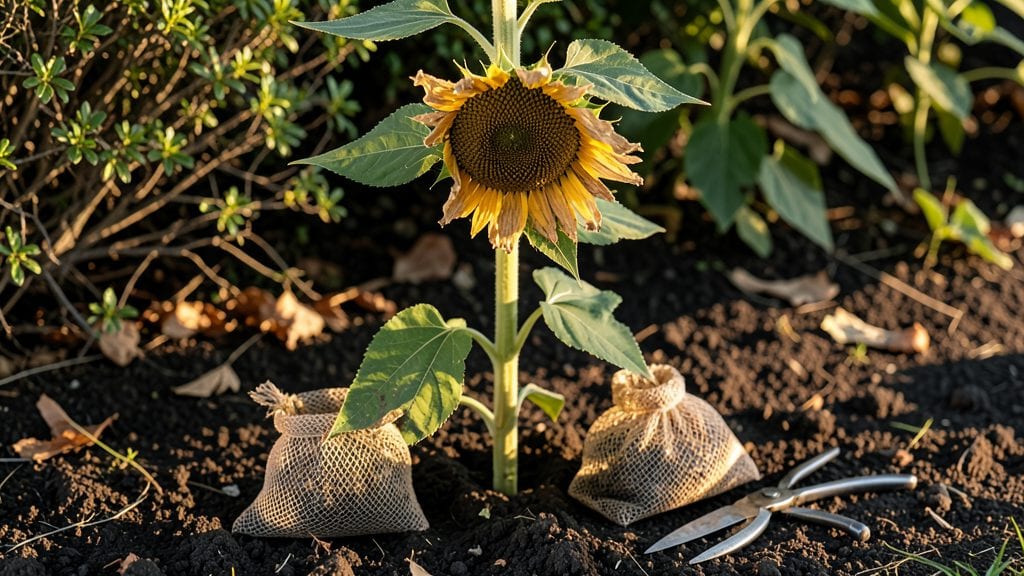
You can freeze sunflower seeds but must prepare them carefully to protect their ability to sprout later. Remove all moisture, package them in sealed containers with desiccant packs, and store at 0°F (-18°C) for up to 12 months.
Freezing sunflower seeds works best when you control moisture and temperature—two critical factors for seed survival. 🌱 The key is removing all humidity before storage, as even slight dampness can trigger mold or rot during freezing.
I recommend using silica gel packets in your storage containers to absorb any lingering moisture. Once properly dried and sealed, the cold temperatures actually slow down metabolic processes, preserving the seeds' natural enzymes for germination when you're ready to plant.
This method isn't just about long-term storage—it's also a smart way to preserve heirloom varieties or save seeds from your garden for next season. Just remember that while freezing extends shelf life, it's not indefinite.
After 12 months, germination rates may start to decline, so always test a few seeds before committing to a full planting.
💡 In This Article
- How Freezing Affects Sunflower Seed Germination
- Step-by-Step Guide to Freezing Sunflower Seeds
How freezing affects sunflower seed germination
Freezing sunflower seeds preserves their viability by temporarily halting biological activity through cryopreservation. At 0°F (-18°C), water inside seed cells forms ice crystals, but the process only works when moisture levels drop below 5-7%.
This dehydration prevents cellular rupture that would occur with higher moisture content. The key is that enzymes responsible for germination remain stable when cooled slowly—rapid freezing can create damaging ice spikes within cells.
Sunflower seeds contain lipids and proteins that are sensitive to oxidation during freezing. Oxygen deprivation in sealed containers slows this degradation, but any residual moisture accelerates rancidity. That's why seeds with 10%+ moisture develop off-flavors or mold within weeks.
The ideal scenario mimics nature's winter dormancy: seeds enter a metabolic pause where growth processes stop without permanent damage.
Here's what happens at the cellular level: Ice formation between cells (extracellular) is less harmful than intracellular ice. Slow cooling at 1°F (-17°C) per hour gives water time to migrate outside cells, protecting delicate membranes.
This is why commercial seed banks use controlled-rate freezers. Without this care, ice crystals can pierce cell walls, reducing germination rates by 30-50% in just months.
Temperature fluctuations are the enemy—each thaw cycle increases stress. That's why storing seeds in a deep freezer (-4°F/-20°C) with stable conditions extends viability beyond 12 months.
The cold preserves the seed's radicle (embryonic root) and plumule (shoot) in suspended animation. When properly thawed, these structures can resume growth with minimal delay.
What most people don't realize is that sunflower seeds have a hard seed coat that naturally protects against some moisture damage. However, freezing removes this advantage by creating microscopic cracks from ice expansion.
That's why post-freeze germination testing is critical—planting a sample batch helps identify if viability dropped below 80%, the threshold for reliable sprouting.
For comparison, properly dried and frozen sunflower seeds maintain 90%+ germination after 6 months, but this drops to 70-80% at 12 months. The decline accelerates after that due to cumulative cellular damage.
This scientific reality explains why seed banks recommend testing small batches annually rather than relying on storage duration alone.
Understanding these mechanisms helps explain why some seeds fail to sprout after freezing. The balance between moisture control, cooling rate, and oxygen levels creates a delicate ecosystem where even small errors can compromise viability. 💫