Plants
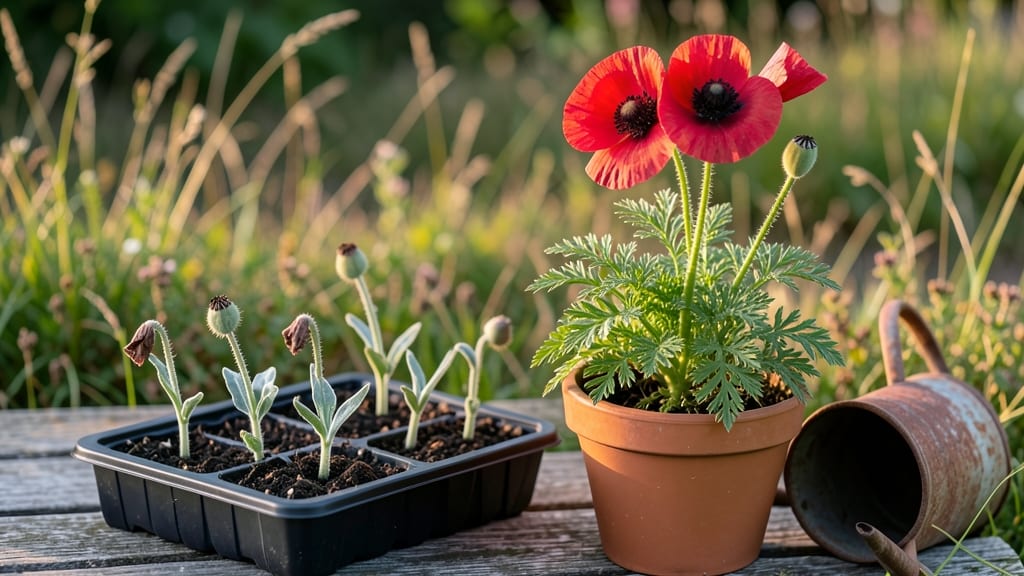
You can plant poppy seeds from the grocery store, but expect wildflower blooms rather than edible poppies. These seeds often come from ornamental varieties, so choose unsalted, unflavored seeds and plant them shallowly in well-draining soil for best results.
Most grocery store poppy seeds are harvested from ornamental varieties bred for vibrant flowers rather than culinary use. 🌸 The seeds you'd sprinkle on bagels or muffins come from different plants entirely—often Papaver somniferum (opium poppy) for food, while garden poppies belong to Papaver rhoeas or similar species.
Even if you get lucky with edible seeds, germination requires patience: scatter them on bare soil in early spring, press lightly, and keep the surface moist until sprouts appear in 2-4 weeks.
If wildflowers are your goal, embrace the unpredictability—these poppies self-seed prolifically and attract pollinators. For edible poppies, seek specialty seed suppliers or save seeds from certified food varieties you've grown yourself.
The key is soil: poppies despise soggy conditions, so prioritize sandy loam with excellent drainage. Once established, they're surprisingly low-maintenance, thriving in full sun with minimal watering.
💡 In This Article
- Why Grocery Poppy Seeds May Not Yield Edible Flowers
- How to Grow Poppies from Store-Bought Seeds Successfully
Why grocery poppy seeds may not yield edible flowers
Grocery store poppy seeds typically come from ornamental poppy varieties like Papaver rhoeas (corn poppy) rather than the culinary Papaver somniferum used for baking.
These ornamental varieties are bred for vibrant flower displays rather than seed production, which means their seeds often lack the genetic traits needed for consistent edible yields.
The key difference lies in their reproductive focus: ornamental poppies prioritize showy blooms, while food poppies are cultivated specifically for their seeds' nutritional value and flavor profile.
The seeds you sprinkle on bagels or muffins are usually harvested from the Papaver somniferum plant's seed capsules, which are carefully cultivated to produce high-quality, flavorful seeds.
In contrast, ornamental poppy seeds often come from hybrid varieties that may produce 10-30% fewer viable seeds per capsule and with different growth patterns.
These hybrids frequently exhibit what botanists call "heterosis" or hybrid vigor, which can lead to unexpected flower colors or even sterile seeds in some cases. 🌸 What's more, many grocery seeds undergo processing that removes the outer seed coat, which contains natural germination inhibitors—making them less reliable for planting.
Here's what happens when you plant grocery poppy seeds: the resulting plants may produce beautiful wildflowers but often lack the thick, plump seed pods characteristic of food varieties.
The seeds from these wildflowers will typically be smaller and less flavorful, with a more bitter taste due to higher alkaloid content—a natural defense mechanism in ornamental plants. This is why you might end up with poppies that look stunning in your garden but aren't suitable for culinary use.
The genetic divergence becomes especially apparent in the second generation, where traits from both parent plants can create unpredictable combinations.
Another critical factor is seed sourcing. Many grocery store seeds are imported from regions where they're grown specifically for their ornamental value, not food production. These seeds may carry trace amounts of morphine or codeine (up to 0.04% in some cases), though not enough to be dangerous.
The real issue is that these seeds often come from plants that have been selectively bred over generations to prioritize flower color, size, and drought resistance—traits that don't translate well to seed production.
For comparison, a true culinary poppy plant can produce up to 50,000 seeds per plant, while many ornamental varieties yield only 10,000-20,000 seeds with less predictable quality.
The growth patterns also differ significantly. Culinary poppy varieties develop thick, fleshy seed pods that protect the seeds during maturation, while ornamental poppies often produce thinner, more delicate pods that split open easily.
This structural difference means grocery store seeds may germinate successfully but fail to develop the robust seed heads needed for consistent harvests. The resulting plants might bolt (flower and seed) more quickly, sometimes in as little as 6-8 weeks rather than the 10-12 weeks typical of food varieties.
This rapid bolting reduces the window for seed development and often leads to smaller, less viable seeds. 💫
What most gardeners don't realize is that even if you successfully grow plants from grocery seeds, the second generation will often exhibit even greater variability. This is due to the breakdown of hybrid vigor and the emergence of recessive traits.
For example, a red-flowered ornamental poppy might produce offspring with pink, white, or even striped flowers—traits that have no culinary value. The genetic instability becomes particularly apparent when you try to save seeds from these second-generation plants for planting the following year.
For those hoping to grow edible poppies, the solution lies in using seeds specifically labeled for culinary purposes from reputable seed suppliers. These seeds come from plants that have been selectively bred for consistent seed production over many generations, ensuring both flavor and yield stability.
The key takeaway is that while grocery poppy seeds can be planted, they're essentially a gamble—one that's far more likely to produce beautiful wildflowers than the plump, flavorful seeds you'd find in a bakery. 🌿