Planting
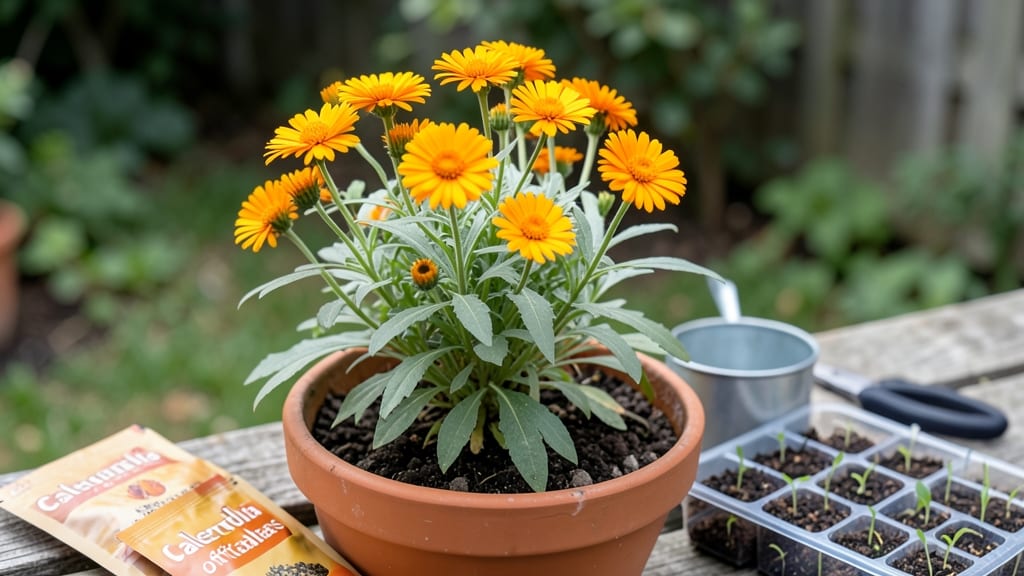
Sowing calendula seeds directly into garden beds transforms any sunny patch into a sea of cheerful blooms in just 60 days. I’ve grown calendula for years, and the secret to reliable germination lies in timing, soil prep, and a few simple adjustments most gardeners overlook.
The first true leaves appear within 7-14 days when conditions are right, and by mid-summer, you’ll have vibrant flowers that attract pollinators while repelling pests naturally.
Start by choosing a location with full sun—calendula thrives where other flowers struggle—and prepare the soil with a light mix of compost. Seeds need only ¼-inch depth to sprout, so avoid pressing them too firmly.
Space seeds 12-18 inches apart for bushier plants, or sow thicker for cut flowers. Keep the soil consistently moist but never soggy, as overwatering drowns delicate seedlings before they emerge.
Once seedlings reach 2-3 inches tall, thin them to prevent competition, and watch as they develop their signature golden-yellow or orange blooms. Calendula’s hardy nature means it tolerates heat and drought better than many annuals, but regular deadheading encourages nonstop flowering until frost.
The petals even make a gentle tea—just another reason this plant belongs in every garden.
For cooler climates, start seeds indoors 4-6 weeks before your last frost date, then transplant after soil warms to 50°F. In warmer zones, direct sow after the danger of frost passes.
Whether you’re growing for beauty, edible flowers, or companion planting, calendula delivers results with minimal effort—once you know the right approach.
📚 In This Guide
- What you need
- Instructions
- Tips and common mistakes
- Wrapping up and next steps
What you need
- ● Calendula seeds: 1 packet (50–100 seeds, non-GMO preferred for best results).
- ● Seed-starting mix: 1–2 gallons of sterile, well-draining potting soil (avoid garden soil—it’s too dense!).
- ● Containers: 4–6 seed trays (1020-cell or 72-cell) or
- ● Small pots (3–4 inches deep) with drainage holes.
- ● Grow lights or sunny windowsill: 6–8 hours of light daily (south-facing window or LED grow lights).
- ● Spray bottle: For gentle watering (avoid over-saturating seeds!).
- ● Plastic wrap or humidity dome: To retain moisture until germination (5–10 days).
- ○ Fertilizer (optional but helpful): Balanced liquid fertilizer (5-5-5 or 10-10-10, diluted to half-strength).
- ● OR organic compost tea for a natural boost.
- ● Small hand trowel: For planting seeds at the right depth (¼ inch max!).
- ● Labels & marker: To track seed varieties and planting dates.
- ● Transplanting tray or biodegradable pots: For hardening off seedlings before outdoor planting.
- ● Pruners or scissors: For snipping spent blooms to encourage more flowers.
- ○ Gloves: Optional but handy for messy soil or thorny stems (calendula is mild, but why not?).
Instructions for sowing calendula seeds indoors
Here's the straightforward approach I've used for years to get vibrant calendula blooms in just 60 days.
Prepare Containers and Seed Starting Mix
Fill your 4-inch diameter pots with the 2 gallons of seed starting mix, leaving about ½ inch of space at the top. Calendula seeds need loose, well-draining soil to prevent damping-off. I like to break up any clumps in the mix with my fingers before adding it to the pots—this ensures even moisture distribution later.
Press the soil down gently but firmly to remove air pockets. The surface should be level, not mounded. If you're using the humidity dome, place it upside down on the pots now—you'll flip it later. This early setup prevents soil from shifting when you add seeds.
Sow Seeds at the Correct Depth
Scatter 2-3 seeds per pot across the soil surface, spacing them about ½ inch apart. Calendula seeds are tiny, so I use the toothpick to carefully place them without burying them too deep. The rule is no deeper than ¼ inch—any deeper and they'll struggle to emerge.
Cover the seeds lightly with a thin layer of additional mix, just enough to obscure them from view. Avoid pressing down—calendula seeds need gentle contact with soil to germinate. Water the pots gently with the spray bottle until the soil feels evenly moist but not soggy.
Provide Warmth and Consistent Moisture
Place the pots in a warm location, ideally between 70-75°F. A seedling heat mat works wonders here, keeping the soil consistently warm. Cover the pots with the humidity dome to retain moisture and warmth—this creates the ideal environment for germination.
Check the soil daily but only water when the top ¼ inch feels dry. Overwatering at this stage is the fastest way to lose seedlings to fungal diseases. Germination typically takes 7-14 days, but don't be surprised if some seeds take longer—calendula is patient.
Introduce Light and Thin Seedlings
Once seedlings emerge, remove the humidity dome immediately to prevent mold. Move the pots under grow lights or to a south-facing window where they'll receive 12-14 hours of light daily. Calendula seedlings grow quickly but need strong light to stay compact—without it, they'll stretch and weaken.
When seedlings develop their first true leaves (the second set after the initial cotyledons), thin them to the strongest plant per pot. Use the small scissors to snip the weaker seedlings at soil level—this avoids disturbing the roots of the ones you're keeping.
Harden Off and Transplant Outdoors
About 3 weeks before your last frost date, begin hardening off the seedlings. Start by placing them outside in a sheltered spot for 1-2 hours the first day, gradually increasing exposure over 10-14 days. Calendula thrives in full sun, so this step prepares them for their final location.
Transplant the seedlings outdoors after all danger of frost has passed, spacing them 12-18 inches apart in well-draining soil. Water deeply at the base to encourage root growth. With proper care, you'll see vibrant blooms in just 60 days—a true testament to calendula's fast-growing nature.
Tips & tricks for perfect calendula seed starting
Mastering these key techniques will help you avoid common pitfalls and ensure your calendula seedlings thrive from the very beginning.
Soil Preparation Secret: In Step 1, when breaking up clumps in your 2 gallons of seed starting mix, I recommend adding a handful of perlite or vermiculite to improve drainage. Calendula roots need oxygen as much as moisture, and this prevents that dreaded damping-off disease. Think of it as giving your seeds a breath of fresh air right from the start.
Seed Placement Precision: During Step 2, those tiny calendula seeds are delicate—don't let their size fool you. Use your toothpick to create small divots in the soil surface before placing each seed. This ensures consistent depth without burying them too deeply. I've found that seeds placed in these tiny pockets germinate more reliably and emerge more uniformly.
Temperature Consistency: Maintaining that 70-75°F range in Step 3 is crucial, but don't rely solely on your thermometer. Place your hand near the soil surface—it should feel comfortably warm, like a cozy spring day. If your home tends to be cooler, the seedling heat mat becomes even more valuable. Remember, these seeds are from Mediterranean climates where warm soil is second nature to them.
Light Transition Strategy: When moving seedlings to 12-14 hours of light in Step 4, I suggest introducing them gradually over 3-4 days. Start with just 6 hours of light on day one, then increase by 2 hours daily. This mimics natural conditions and prevents the shock that can cause leggy, weak seedlings. Your goal is to build their light tolerance just as you'll build their cold tolerance during hardening off.
Pro Tips for Sowing Calendula Seeds
- Mastering these key techniques will help you avoid common pitfalls and ensure your calendula seedlings thrive from th...
- Soil Preparation Secret: In Step 1, when breaking up clumps in your 2 gallons of seed starting mix, I recommend addin...
- Seed Placement Precision: During Step 2, those tiny calendula seeds are delicate—don't let their size fool you. Use y...
Frequently asked questions
Got questions about sowing calendula seeds? You’re not alone! Here are answers to the most common queries to help you grow vibrant blooms with confidence.
When is the best time to plant calendula seeds?
Calendula thrives in warm soil, so aim to sow seeds after the last frost when temperatures consistently stay above 50°F (10°C). For a longer harvest, start seeds indoors 4-6 weeks before transplanting in late spring. In warmer climates, you can even plant in early fall for winter blooms!
How long does it take for calendula to grow from seed?
From seed to bloom, calendula typically takes 60-70 days in ideal conditions. Germination usually occurs in 7-14 days if kept moist and warm. Patience pays off—those cheerful flowers are worth the wait! For faster results, opt for transplants from a nursery.
Do calendula seeds need light to germinate?
Nope! Calendula seeds do not require light to sprout—they’ll germinate just fine in darkness if kept in moist soil at 65-75°F (18-24°C). Once they’ve sprouted, move them to a sunny spot (at least 6-8 hours of sunlight daily) to encourage strong, healthy growth.
What should I do if my calendula seeds aren’t sprouting?
Don’t panic! First, check if the soil is too dry or too cold—calendula seeds need consistent moisture and warmth. If they’re still stubborn, try scarifying them (lightly nicking the seed coat) or soaking them in warm water for 24 hours to boost germination. If all else fails, fresh seeds or a new batch might be the trick!
Can I grow calendula indoors or in containers?
Calendula adapts well to containers (at least 12 inches deep) and can even thrive indoors near a sunny window. Use well-draining potting mix and ensure the pot has drainage holes. For extra blooms, pinch back the flowers as they fade—this encourages bushier growth!
Wrapping up and next steps
Sowing calendula seeds is a rewarding journey that brings vibrant blooms to your garden in just 60 days! With the right soil, sunlight, and care, you’ll enjoy cheerful orange, yellow, and gold flowers that attract pollinators and add beauty to your space.
Whether you’re a beginner or a seasoned gardener, these cheerful blooms are a joy to grow.
Now that you’re ready to plant, grab your seeds and get started—your future garden will thank you! For extra tips, check out our calendula care guide next.