Trees
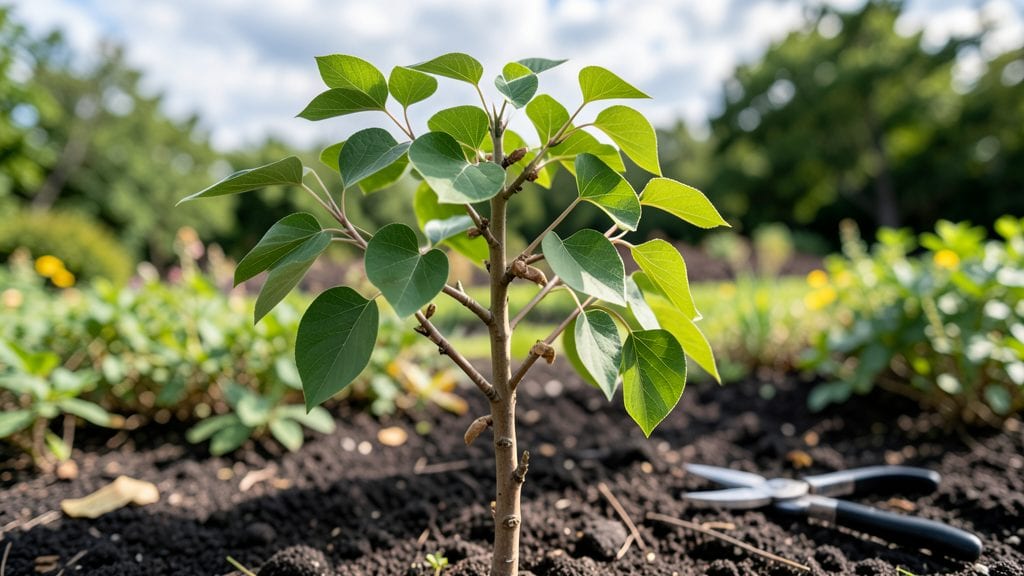
The identification of a redbud seedling begins with those heart-shaped leaves—the first clue that sets them apart from every other tree in your yard. 🌿 I still remember the first time I spotted a wild redbud sprout in my neighbor’s yard, its tiny leaves cupped like perfect little hands.
The bark is another dead giveaway: smooth and silvery when young, with a faint zigzag pattern that disappears as it matures.
Most people confuse redbud seedlings with dogwood or even young hickories, but the leaf veins are the real secret weapon. Redbud leaves have three main veins that spread out like a starburst from the stem, while dogwoods have a more subtle network.
Grab a magnifying glass if you need to—this is where patience pays off, and the difference becomes crystal clear.
Once you’ve confirmed those heart-shaped leaves and starburst veins, check the growth habit. Redbud seedlings grow low to the ground in their first year, often forming dense clusters of stems.
Healthy seedlings should have firm stems and no signs of yellowing or curling leaves—those are red flags for disease or pests. With the right care, you’ll see those iconic pink blooms in just a couple of years.
If you’re sourcing seedlings, stick to reputable nurseries or collect them from mature redbud trees in late spring after the flowers fade. Avoid seedlings with woody stems or brown spots, as these won’t survive long-term.
Start them in well-draining soil and keep them moist but not soggy—your future shade tree is counting on you.
Understanding Seedling Confusion
Identifying young redbud seedlings (Cercis canadensis) can be tricky because they share traits with other native trees—especially during their early growth stages. Misidentification often stems from a mix of natural growth patterns, environmental influences, and subtle but critical differences between species.
Below, we break down the key reasons why seedlings might be mistaken for something else—and how to spot the real clues.
Redbud seedlings start with simple, rounded leaves that resemble those of other early-successional trees, like hickories or ash saplings. Here’s why this causes confusion:
- Juvenile vs. Mature Leaves: Young redbud leaves are cordate (heart-shaped) but lack the deep notches or serrated edges seen in mature trees. Before full development, they can mimic the smooth, lobed leaves of boxelder or even black cherry seedlings.
- Size Matters: Seedlings under 12 inches tall often have leaves no larger than 1–2 inches long. At this scale, subtle differences (like leaf base asymmetry in redbuds) are hard to spot without close inspection.
- Seasonal Variations: Early spring flushes may produce slightly glaucous (waxy) leaves, adding another layer of visual noise. This can make them look like sycamore seedlings, which also have a silvery tint when young.
💡 Pro Tip: Look for asymmetry in the leaf base—the redbud’s lower lobes often curve unevenly, while competitors like hackberry have more symmetrical bases.
Bark is a redbud’s tell-tale sign in maturity, but seedlings rarely develop the iconic exfoliating, reddish-brown plates until they’re 5+ years old. Before then, their bark can fool even experienced arborists:
- Smooth Gray Bark: Young redbud trunks are often smooth and silvery-gray, similar to birch or beech seedlings. This texture is deceptive because these trees belong to entirely different families.
- Lenticels (Pore-Like Spots): Tiny raised dots (lenticels) appear on redbud bark as they age, but seedlings may only show faint traces. These can be mistaken for the horizontal striations on shagbark hickory saplings.
- Thin, Brittle Bark: Unlike oaks or maples, redbud bark is paper-thin when young and peels easily. This fragility can make it resemble willow bark, which is also delicate but lacks the redbud’s subtle reddish tint.
🔍 Actionable Fix: Scrape a small section of bark with your fingernail. Redbud bark often reveals a slightly reddish underlayer, while competitors like ash will show a uniform gray or brown.
Redbuds grow in multi-stemmed clumps or as understory shrubs, which overlaps with the habits of:
- Eastern Red Cedar (Juniperus virginiana) – Both can form dense, bushy thickets, but redbuds have opposite branching (cedars are alternate).
- Serviceberry (Amelanchier spp.) – Similar leaf shapes, but serviceberry leaves are more finely serrated and have a shorter petiole (leaf stalk).
- Wild Plum (Prunus americana) – Both have heart-shaped leaves, but plum seedlings develop thorns early, while redbuds do not.
🌡️ Environmental Red Flags: Redbuds thrive in disturbed soils (e.g., old fields, forest edges) and often sprout in clusters from fallen seed pods. If you see a group of seedlings with no parent tree nearby, it’s likely a redbud colony.
Insects and diseases can warp a redbud seedling’s natural features, making identification harder:
- Japanese Beetles or Spider Mites: Heavy feeding causes yellow stippling or webbed leaves, mimicking stress in black walnut seedlings.
- Fungal Leaf Spot: Dark spots with halos (common in wet springs) can make leaves look like those of sassafras, which also suffer from fungal issues.
- Verticillium Wilt: Young redbuds may show wilting and browning in one branch, resembling elm seedlings affected by Dutch elm disease.
✨ Solution: Examine healthy leaves on the same seedling. If most are intact and heart-shaped with uneven bases, it’s likely a redbud—pests don’t change the core structure.
Quick fixes for seedling confusion
If you’re staring at a tiny sapling and scratching your head—Is this a redbud or something else?—don’t worry! Misidentifying seedlings is common, but these practical fixes will help you spot the differences like a pro.
Below, we’ve mapped the most frequent causes of confusion to clear, actionable solutions, plus prevention tips to keep your green thumb sharp.
Cause: Redbud seedlings often share leaf shapes with other early spring bloomers (like dogwood or hawthorn), making them hard to distinguish at first glance.
Fix:
- 🌿 Compare leaf edges: Redbud leaves are smooth-edged (no serrations or lobes). Run your finger along the leaf margin—if it’s as smooth as a baby’s cheek, it’s likely a redbud.
- 📏 Check leaf size: Young redbud leaves are 2–4 inches long and heart-shaped with a slightly pointed tip. Snap a photo next to a ruler for scale if needed.
- 🌸 Look for buds: Before leaves unfurl, redbud buds are plump and fuzzy (unlike the sleek, pointed buds of dogwoods).
Prevention Tip: 💡 Bookmark a cheat sheet with side-by-side images of redbud vs. lookalikes (e.g., dogwood’s oval leaves with visible veins). Keep it handy during planting season!
Cause: Seedlings often lack distinctive bark, leaving you guessing if it’s redbud, cherry, or another smooth-barked tree.
Fix:
- 👨🔧 Scratch-test: Use your fingernail to gently scrape the stem. Redbud bark is light gray-brown and peels in thin strips (like sunburnt skin). If it’s reddish or flakes off in chunks, it’s probably not a redbud.
- 🔍 Zoom in on lenticels: Redbud stems have tiny, raised dots (lenticels) spaced evenly apart. Magnify with a phone camera if needed—these are a dead giveaway!
- 🌱 Wait for spring blooms: Redbuds burst into vibrant pink-purple flowers before leaves appear. If you spot flowers on a bare branch, you’ve nailed it.
Prevention Tip: ✨ Plant a reference tree nearby. Mature redbuds have distinctive, peeling bark—use it as a comparison point for seedlings.
Cause: Tiny seedlings can resemble weeds or other ground covers, making them easy to overlook or mislabel.
Fix:
- 📏 Measure height: True redbud seedlings are 6–12 inches tall in their first year. If it’s shorter than your palm, it might be a weed (like clover) or a misidentified sprout.
- 🌿 Check the base: Redbud seedlings sprout from a single central stem (no multiple trunks like hawthorn). Pull back surrounding mulch or leaves to inspect.
- 🌱 Transplant test: Dig up a suspect seedling (gently!) and replant it in a pot. Observe its growth pattern—redbuds grow upright and fast compared to sprawling vines or slow creepers.
Prevention Tip: 🌡️ Monitor planting beds weekly in spring. Redbud seeds germinate early (February–March in warm climates), so check before weeds take over.
Cause: Overgrown areas or neglected gardens can hide redbud seedlings under layers of dandelions, grass, or other invasives.
Fix:
- 🔪 Clear the clutter: Use a hand trowel to gently dig around suspect plants. Redbud seedlings have delicate, hair-thin roots—if you find a tangled mess, it’s likely a weed.
- 🌸 Flower scout: Walk your property in late winter before other plants leaf out. Redbud flowers peek through snow or bare soil—spot them early!
- 📸 Take progress photos: Snap monthly images of “mystery plants.” Redbuds grow noticeably taller each week, while weeds stagnate.
Prevention Tip: 🎯 Mulch strategically with wood chips (3–4 inches deep) to suppress weeds while letting redbud seedlings thrive. Avoid plastic mulch—it traps heat and can kill young sprouts.
With these fixes, you’ll go from “Hmm, maybe?” to “Positive ID: Redbud!” in no time. And remember: even experts double-check—so grab your magnifying glass and happy hunting! 🌱🔍
Frequently asked questions
How can I tell if a seedling is a redbud before it gets leaves?
Look for plump, fuzzy buds along the stem—redbud buds are round and hairy unlike the sleek, pointed buds of dogwoods or cherries. In late winter, scan bare branches for these distinctive buds, which will bloom into pink-purple flowers before leaves appear.
Why do some redbud seedlings have leaves that look more oval than heart-shaped?
Young redbud leaves start heart-shaped but may appear more oval in their first few weeks due to juvenile leaf development. Check the leaf base—if it’s asymmetrical with one side slightly deeper than the other, it’s still a redbud. Mature leaves will always show that classic heart shape.
Can I grow a redbud from a seed I find in a pod?
Yes, but germination takes 30-60 days in moist, well-draining soil. Plant seeds 1/4 inch deep in spring after the last frost. Keep soil consistently moist (not soggy) and expect slow initial growth—redbuds from seed may take 3-5 years to bloom compared to nursery-grown seedlings.
What should I do if I think I’ve planted a weed instead of a redbud seedling?
Check for heart-shaped leaves with uneven bases and smooth-edged margins. If the plant has multiple stems, thorns, or serrated leaves, it’s likely not a redbud. For confirmation, snap a photo and compare with online redbud seedling galleries—many weeds mimic early growth stages.
How do I know if my redbud seedling is healthy?
A healthy redbud seedling should have firm, green leaves with no yellowing or curling, and smooth gray-brown bark without cracks. Check for pests like aphids (tiny green bugs) or signs of fungal spots. Keep soil moist but well-draining—overwatering causes root rot in seedlings.