Trees
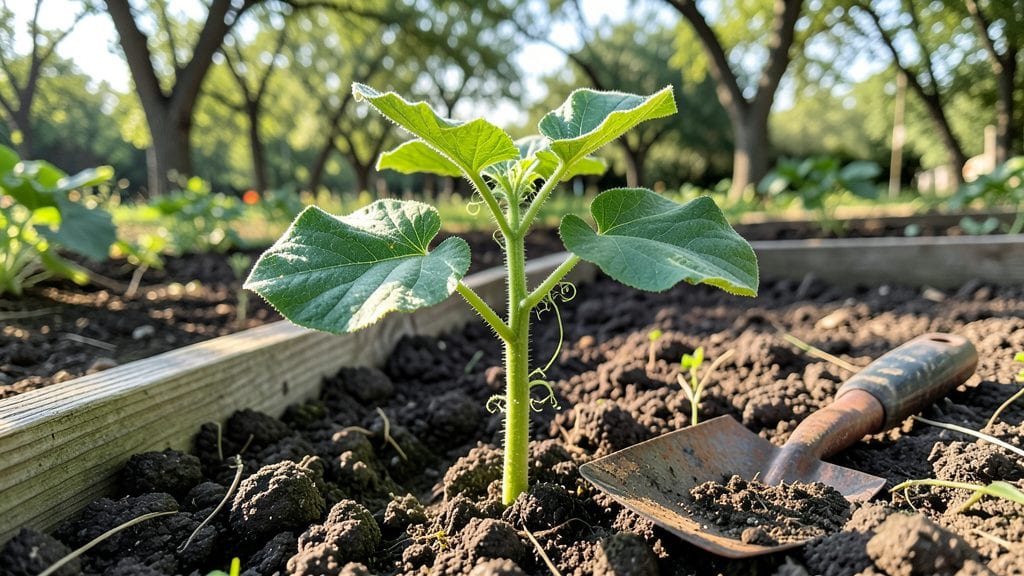
Mastering melon seedling identification early prevents you from yanking out weeds or mislabeling plants you’ll later regret losing—start with their leaf shape. 🌱 often have jagged edges or narrow points.
My first season, I nearly tossed out my cantaloupe seedlings because they looked like dandelion sprouts until I noticed the thick, fuzzy stems—melons always have that velvety texture right from the start.
The real game-changer is growth speed and pattern. True melon seedlings grow in a zigzag pattern when young, with the first true leaves appearing within 7-10 days of germination. Compare that to squash, which unfurls more uniformly, or cucumbers, which develop serrated edges faster.
I keep a small notebook with photos of my seedlings' first leaves—it's the only way to tell heirloom varieties apart before they vine out.
By the time they're two weeks old, you'll spot the telltale hollow stems and deep green veins that run parallel along the leaf edges.
These traits stay consistent even as the plants mature, so once you learn them, you'll never confuse a melon sprout with a volunteer tomato or purslane again. The payoff? Stronger plants from the start, since you're not uprooting them by accident.
This method works for cantaloupes, honeydews, and watermelons alike—just watch for slight variations in leaf lobing depth. Even in shady conditions, the stem texture and growth habit remain reliable. Here's how to spot the differences before they get too big to tell apart.
Root Causes of Misidentification
Accurately identifying melon seedlings can be tricky, especially when they’re still young and their defining traits haven’t fully emerged. Misidentification often stems from a mix of environmental, biological, and human factors.
Below, we break down the key reasons why seedlings might be confused—so you can spot the clues and avoid costly mistakes.
Melon seedlings, like many plants, undergo dramatic changes as they mature. Early on, their leaves, stems, and growth patterns may resemble those of other cucurbits (like squash or cucumbers) or even unrelated plants. Here’s why this happens:
- Leaf morphology shifts: Young melon seedlings often have simple, rounded leaves that later develop into the characteristic lobed or serrated shapes of mature varieties (e.g., cantaloupe’s jagged edges vs. honeydew’s smoother lobes). Without these defining features, seedlings can look nearly identical to other cucurbits.
- Vines vs. stems: Melon seedlings may not yet exhibit the trailing or climbing habits of adult plants. Some varieties (like watermelon) start with upright growth before sending out runners, leading to confusion with bushier squash types.
- Color confusion: Seedling leaves are typically dark green and uniform, masking the variegation or lighter hues (e.g., yellow-green in some heirloom melons) that appear later.
Pro tip: 💡 Wait until seedlings have 4–6 true leaves (not cotyledons—the first two leaves) before attempting identification. This is when variety-specific traits like leaf shape and vein patterns start to show.
Stress from temperature, light, or soil conditions can alter a seedling’s appearance, making it harder to match it to a variety. Common stressors include:
| Factor | Effect on Seedlings | How to Fix It |
|---|---|---|
| 🔥 Heat stress | Leaves may curl, yellow, or develop irregular shapes due to protein breakdown. | Provide shade cloth (30–50% coverage) until seedlings acclimate. |
| 🌑 Low light | Stems elongate (etiolation), leaves stay small and pale, mimicking weak or diseased plants. | Use grow lights (12–16 hours/day) or transplant to a sunnier spot. |
| 💧 Over/under-watering | Wilting or mushy stems can distort leaf structure, making identification unreliable. | Water consistently at soil level (avoid wetting leaves) and ensure drainage. |
| 🌡️ Temperature swings | Cold snaps can stunt growth or cause mottling, while heat waves may bleach leaves. | Use row covers for frost protection and harden off seedlings gradually. |
Key insight: Stress-induced changes can make a cantaloupe seedling look like a sick cucumber or a squash seedling appear stunted. Always compare seedlings grown under consistent, optimal conditions to reference photos.
Even with healthy seedlings, misidentification often boils down to overlooking subtle details or relying on incomplete references. Common pitfalls include:
- Ignoring cotyledons: The first two leaves (cotyledons) are non-predictive and vary widely across melon types. Focusing on them instead of true leaves leads to errors.
- Over-reliance on color: Seedling leaf color can shift with age or light exposure. For example, a "yellow-green" heirloom melon might appear uniformly green in shade.
- Comparing to wrong references: Using photos of mature plants to identify seedlings (or vice versa) is like comparing a toddler’s handwriting to an adult’s—fundamentally different.
- Mixing up hybrids: F1 hybrid melons (like many commercial varieties) may produce seedlings with traits from both parent plants, creating unpredictable leaf patterns.
Actionable fix: ✨ Use a checklist for melon seedling traits, such as:
- Leaf shape (lobed? serrated? smooth?)
- Stem hairiness (some melons have fuzzy stems)
- Growth habit (upright, trailing, or bushy)
- Presence of tendrils (watermelons lack them; melons often have them)
If you’re growing from saved seeds or purchased mixed varieties, genetic contamination can create seedlings that defy identification. Here’s how it happens:
- Unintentional cross-pollination: Melons are often pollinated by bees, which can transfer pollen between varieties in close proximity. A "pure" cantaloupe seedling might sprout with traits of a nearby honeydew.
- Old or stored seeds: Seeds lose viability over time, and older batches may produce seedlings with erratic or reverted traits.
- Mislabelled seed packets: Even reputable sellers occasionally make errors, leading to seedlings that don’t match the label.
Solution: 🎯 To minimize confusion:
- Isolate melon varieties by at least 50 feet during flowering.
- Use fresh seeds (<1 year old) from trusted sources.
- Label seedlings immediately after germination with the expected variety and monitor for deviations.
Fixing Common Seedling Struggles
When your melon seedlings aren’t quite matching expectations, quick action can make all the difference. Below are practical solutions for the most common issues—from stunted growth to misidentified varieties—along with prevention tips to keep your seedlings thriving.
Cause: Overcrowding, poor soil nutrition, or temperature stress. Fix:
- 🔥 Thin seedlings early. If seedlings are packed too closely, gently remove weaker ones, leaving the strongest 6–8 inches apart.
- 🍳 Boost nutrients. Amend soil with compost or a balanced fertilizer (10-10-10) at half-strength to avoid burning tender roots.
- 🌡️ Adjust temperature. Keep seedlings in a warm (70–85°F) environment—cool nights can stunt growth.
Prevention:
- ✨ Start with sterile, well-draining soil mixed with perlite or vermiculite.
- 🎯 Use grow lights if natural light is insufficient (14–16 hours/day).
Cause: Misidentified variety, nutrient deficiency, or pest damage. Fix:
- 🔍 Cross-check with seed packets. Compare leaf shape, vein patterns, and growth habits to documented varieties (e.g., cantaloupe vs. honeydew).
- 💡 Test soil pH. Yellowing leaves? A pH of 6.0–6.8 is ideal—adjust with lime (to raise) or sulfur (to lower).
- 👨🍳 Inspect for pests. Check undersides of leaves for aphids or spider mites; treat with neem oil if needed.
Prevention:
- 📊 Label seedlings immediately with variety names and planting dates.
- 🥗 Rotate crops to prevent soil-borne diseases affecting leaf health.
Cause: Lack of light or overwatering. Fix:
- 🔪 Bury stems deeper. If seedlings are top-heavy, gently push soil up to the first true leaves to stabilize them.
- 🌞 Increase light exposure. Move seedlings to a sunnier spot or use reflective surfaces (like aluminum foil) to maximize light.
- ⏰ Water consistently. Let soil dry slightly between waterings—soggy roots weaken stems.
Prevention:
- 🌡️ Harden off seedlings gradually before transplanting to toughen stems.
- 🎯 Use smaller containers (2–3 inches wide) to encourage deeper root growth.
Cause: Fungal infections (like powdery mildew) or insect infestations. Fix:
- 🔥 Isolate affected plants to prevent spread.
- 🍳 Spray with organic solutions:
- Powdery mildew: Mix 1 tsp baking soda + 1 quart water + a drop of dish soap; spray every 7–10 days.
- Aphids/spider mites: Use insecticidal soap or neem oil (follow label instructions).
- 🌡️ Improve airflow by spacing seedlings properly (reduce humidity, which fuels fungi).
Prevention:
- 💡 Sterilize tools between uses with rubbing alcohol.
- 🥗 Practice crop rotation to break pest/disease cycles.
Pro Tip: 🌟 Document progress! Snap weekly photos of seedlings to track changes and compare against variety guides. Early intervention saves time—and melons!
Frequently asked questions about melon seedlings
How do I tell cantaloupe seedlings apart from honeydew seedlings at the seedling stage?
Look for leaf shape and stem texture. Cantaloupe seedlings develop jagged, serrated leaf edges by the 4th true leaf, while honeydew leaves stay smoother with rounded lobes. Cantaloupe stems also have fine hairs, while honeydew stems are usually smooth. Check growth pattern too—cantaloupe seedlings grow in a zigzag pattern, while honeydew grows more upright.
What’s the best way to confirm watermelon seedlings before transplanting?
Watermelon seedlings lack tendrils (unlike other melons) and have deeply lobed leaves with rough, sandpaper-like texture by week 3. The first true leaves should show 3-5 pointed lobes. Also check the stem—watermelon seedlings develop a thicker, more rigid stem compared to cantaloupe or honeydew. Compare with reference photos from trusted seed companies.
Why do my melon seedlings look like weeds or other plants?
Young seedlings often resemble weeds or other cucurbits (like squash) because their first true leaves haven’t developed yet. Wait until you see 4-6 true leaves—cotyledons (first two leaves) are unreliable. Common look-alikes include purslane (succulent stems) and volunteer tomatoes (hairy stems). Keep a seedling journal with photos of each variety’s first true leaves to avoid confusion.
Can I use leaf color alone to identify melon seedlings?
No—leaf color varies with light conditions and stress. Focus instead on leaf shape, vein pattern, and stem texture. For example, cantaloupe leaves develop prominent white veins along the edges, while honeydew leaves have more uniform green coloring. Always compare seedlings under the same growing conditions to reference photos from your seed packet.
How long should I wait before trying to identify melon seedlings?
Wait until seedlings have 4-6 true leaves (about 2-3 weeks after germination). This is when variety-specific traits like leaf shape and growth patterns become visible. Before this stage, seedlings may look similar across melon types. Use a magnifying glass to examine leaf edges and vein patterns for more accurate identification.