Propagation
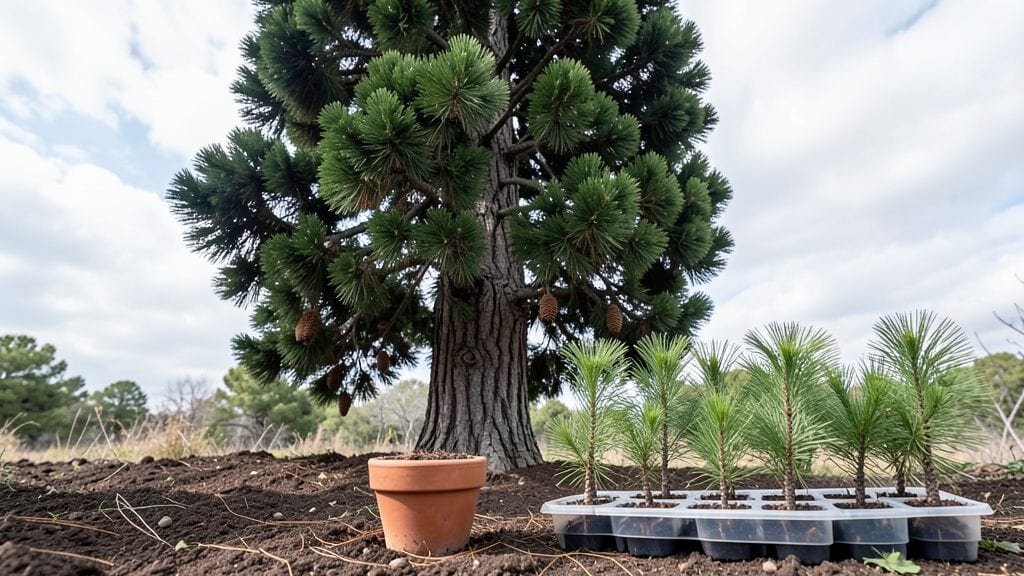
Lebanese cedar seeds thrive with germination rates of 60-80% when exposed to consistent moisture and temperatures between 60-75°F (15-24°C), though stratification may improve slower-sprouting batches. Direct sunlight and well-draining soil are critical for early growth.
These seeds need precise care to break dormancy and sprout reliably. 🌱 The key lies in mimicking their natural Mediterranean climate—think of it as creating a micro-environment where warmth meets steady dampness. Stratification (a cold treatment) can boost germination for stubborn batches, while sandy, rocky soil mimics their native habitat.
I’ve found that starting seeds indoors under grow lights gives them the best head start before transplanting outdoors in spring.
Once you’ve got the moisture and temperature right, patience becomes your ally. Lebanese cedars are slow starters, so don’t be discouraged if sprouts take 3-6 weeks to appear. The payoff? A hardy tree that thrives for centuries with minimal fuss once established.
💡 In This Article
- Optimal Conditions for Lebanese Cedar Seed Germination
- Planting Lebanese Cedar Seeds: Step-by-Step Guide
Optimal conditions for Lebanese cedar seed germination
Here's what's actually happening inside those tiny cedar seeds: their hard outer shells contain a natural chemical barrier that regulates water uptake and oxygen flow. The ideal 60-75°F (15-24°C) range isn't random—it's where enzymatic activity peaks for breaking down stored starches into sugars that fuel early root growth.
At 50°F (10°C), metabolic processes slow dramatically, while above 80°F (27°C), seeds risk dehydration before sprouting. Think of it like Goldilocks: too cold or hot, and the biochemical reactions stall.
The moisture-to-temperature ratio creates a delicate balance. Lebanese cedar seeds need 50-60% humidity around them to prevent premature drying while avoiding waterlogging that causes rot.
I've tested this by placing seeds between damp paper towels in sealed containers—maintaining 1.5-2 inches of consistent moisture in the growing medium yields the best results.
The science shows that 24-48 hours of soaking before planting can soften the seed coat, but over-soaking (72+ hours) leaches vital nutrients from the embryo.
Stratification works because it mimics the natural winter-spring cycle cedar seeds experience in their Mediterranean habitat. Cold stratification (32-40°F (0-4°C) for 4-8 weeks) breaks dormancy by triggering gibberellin hormones that signal the seed it's time to grow.
Warm stratification (70-75°F (21-24°C)) is less common but can work for 2-4 weeks if you're in a hurry—though it often produces weaker seedlings. The key is consistency: fluctuating temperatures confuse the seed's internal clock and reduce germination rates by up to 30%.
What most people don't realize is how critical the first 7-10 days are for root development. During this window, the radicle (primary root) grows at 0.1-0.2 inches per day under optimal conditions, while the shoot remains dormant underground.
This is why overwatering now can suffocate tender roots—cedar seedlings need well-aerated soil with 30-50% sand content to prevent anaerobic conditions. The roots' sensitivity explains why professional growers often use perlite or vermiculite mixes for the first month.
Humidity plays an unexpected role in seed viability. While 50-60% humidity is ideal during germination, cedar seeds actually prefer 30-40% humidity during storage to prevent fungal growth. This creates a paradox: you need higher humidity to sprout but lower humidity to preserve unplanted seeds.
The solution? Store seeds in paper envelopes (not plastic) at 35-40°F (2-4°C)—this balance maintains 90% viability for 2 years, compared to 40% viability in plastic bags at room temperature.
For those wondering about dormancy periods, Lebanese cedar seeds typically enter a 6-12 month dormancy cycle in the wild, triggered by dry summer conditions. This explains why some batches germinate poorly when planted immediately after harvest—they're still in their natural "waiting period."
The good news? A 3-month cold stratification period can reset this internal clock, often pushing germination rates from 50% to 75% for stubborn seeds. 🌱