When to Plant Tomato Seeds Indoors in Ontario: Frost-Date Calculator for Perfect Timing

Plants

When to Plant Tomato Seeds Indoors in Ontario: Frost-Date Calculator for Perfect Timing

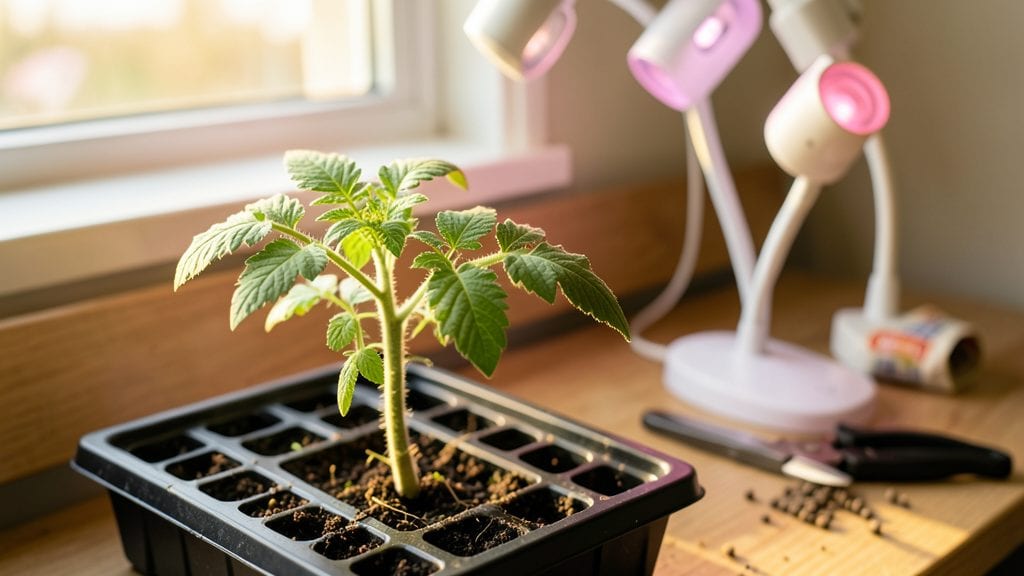
Planting tomato seeds indoors in Ontario at the right time means the difference between a bountiful harvest 🍅 and seedlings that outgrow their pots before they can hit the garden.

Timing your tomato seed planting indoors in Ontario can mean the difference between a thriving garden and a failed harvest—get it wrong, and your plants may not survive the transition outdoors. But with Ontario’s unpredictable frost dates and growing zones, how do you know exactly when to start?

Most Ontario gardeners start tomato seeds indoors between late March and mid-April, giving them a 6-8 week head start before the last frost. This window accounts for our 5a-6b climate, where a late frost in May can still catch off-season plants by surprise.

Below, I’ll break down the exact dates for your region, how to adjust for early or late frosts, and the simple checklist that keeps your seedlings strong enough to thrive once they hit the soil.

🍅 When to Plant Tomato
Jan ❄️
Feb 🌱
Mar 🍅
Apr 🍅
May 🌱
Jun ☀️
Jul ☀️
Aug ☀️
Sep 🍂
Oct 🍂
Nov 🍂
Dec ❄️
Ideal Time
Also Good

Ontario frost dates & indoor tomato seed starting timeline by region

Ontario’s frost dates vary dramatically across regions, making it critical to time your tomato seed starting indoors precisely. In Zone 4 (Northern Ontario), last frosts often hit May 20-30, while Zone 6 (London) may see them as early as May 5-15.

This 6-8 week window for seed starting means you’ll need to adjust your schedule based on your exact location—get it wrong, and your seedlings might be too leggy or too small for transplanting.

For most Ontario gardeners, mid-March to early April is the sweet spot to begin sowing tomato seeds indoors. However, Northern Ontario growers should push this to late March or early April to account for later last frosts.

Using a frost-date calculator (like the one from Environment Canada) can help fine-tune your timing, especially if you’re in a microclimate like a valley or urban heat island.

Here’s the key rule: Count back 6-8 weeks from your average last frost date to determine when to start seeds. For example, if your last frost is May 15, you’ll want to sow seeds by March 25-April 5.

This ensures your seedlings are robust enough to handle outdoor conditions by early June, when soil temperatures are finally warm enough for planting.

Regional differences matter—Toronto’s Zone 5b-6a typically has last frosts around May 10-20, while Ottawa’s Zone 5a leans toward May 15-25. London’s Zone 6b often sees earlier frosts, giving gardeners a slightly longer window.

Northern Ontario’s Zone 4a-5a requires the latest starts, sometimes as late as April 10-20 to avoid frost damage.

Don’t forget that soil temperature plays a role too—tomatoes need soil that’s at least 55°F (13°C) to thrive. In cooler regions, consider using black plastic mulch or row covers to warm the soil faster after transplanting. This can shave off critical days in your growing season.

If you’re unsure about your exact frost date, check historical averages for your city or use a local gardening forum for insights from neighbors.

Many Ontario gardeners also adjust their schedules based on weather forecasts in late April—if a cold snap is predicted, it’s better to delay transplanting than risk losing seedlings to frost.

For container gardening, timing is even more critical since pots warm up faster and can be moved to protect from late frosts. Start your seeds indoors 2-3 weeks earlier than ground-planted tomatoes to give them a head start in smaller, warmer containers.

Now, let’s break down the exact indoor seed-starting timeline by region to help you plan your tomato harvest with confidence.

Region USDA Zone Avg. Last Frost Start Seeds Indoors Transplant Outdoors Notes
Toronto 5b-6a May 10-20 March 20-April 5 May 25-June 5 Urban heat islands may extend season
Ottawa 5a May 15-25 March 25-April 10 June 1-10 Cooler nights; use row covers
London 6b May 5-15 Late Feb-March 20 May 20-June 1 Longer growing season; earlier harvests
Northern Ontario (e.g., Sudbury, Thunder Bay) 4a-5a May 20-June 5 April 10-May 1 June 15-July 1

How to calculate your exact tomato seed starting date using Ontario’s growing zones

Ontario’s frost dates can shift dramatically from year to year, making it tricky to pinpoint the perfect time to start your tomato seeds indoors. A 6-8 week indoor growing period is ideal, but your exact last frost date depends on whether you’re in Toronto, Ottawa, or Northern Ontario.

Without precise timing, your seedlings might be too leggy for transplanting or too young when frost threatens.

To avoid these pitfalls, I’ve created a customizable formula that accounts for your USDA Zone (4-6), local microclimates, and even urban vs. rural growing conditions. This method ensures your tomato plants are ready to thrive once temperatures stabilize.

Let’s break it down step by step so you can calculate your exact starting date with confidence.

  1. Step 1: Find Your Last Frost Date – Check your local frost-free average (e.g., May 15 for Toronto, May 22 for Ottawa). Use Environment Canada’s frost maps or ask local gardeners for recent trends.
  2. Step 2: Subtract 6-8 Weeks – For 6 weeks, start seeds by April 1 (Toronto). For 8 weeks, begin by March 15 to account for slower growth or late frosts.
  3. Step 3: Adjust for Microclimates – Urban areas (e.g., Toronto) may have 2-3 warmer days than rural zones. Add 3-5 days to your starting date if you’re in a city heat island.
  4. Step 4: Account for Seedling Readiness – Transplant when seedlings are 4-6 inches tall with 4-6 true leaves. If your last frost is May 20, aim for April 1 start (6 weeks).
  5. Step 5: Plan for Hardening Off – Dedicate 7-10 days before transplanting to harden off seedlings. If your frost date is May 15, start seeds by March 25 (8 weeks total).

For example, if you’re in London, Ontario (Zone 6a) with an average last frost of May 10, your tomato seed starting window should be between March 20 and April 5. This gives you a buffer for late frosts while ensuring your plants mature before summer heat peaks.

Rural areas often experience earlier frosts, so lean toward the earlier end of the window.

Don’t overlook grow lights if starting in February. Ontario’s short daylight hours can stunt seedlings. Supplement with 12-16 hours of light daily using LED grow bulbs to mimic spring conditions. Without adequate light, your seedlings will grow tall and weak, making them vulnerable to disease and poor transplanting.

Pro tip: Keep a seedling journal to track your starting dates and outcomes. Note whether your tomato varieties (e.g., Beefsteak vs. Cherry) mature faster or slower. Over time, you’ll refine your timing to match your specific microclimate and garden conditions.

With this method, you’ll avoid the heartbreak of frost-nipped seedlings or overgrown transplants that struggle to adapt. Happy planting—your tomato harvest will thank you! 🌱

★★★★★5.0(9 reviews)
Categories Plants