Diseases
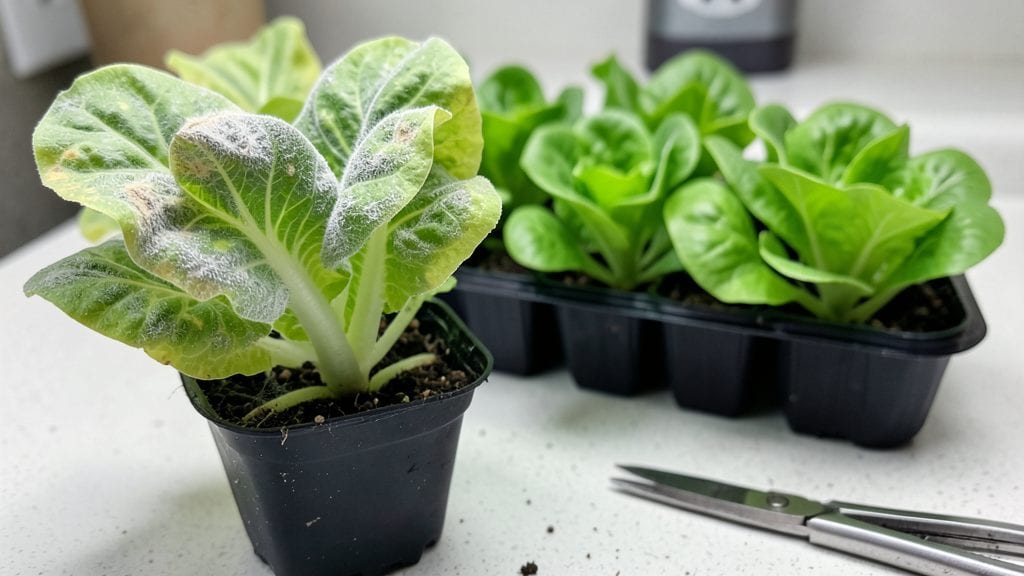
Seeing fuzzy white or gray mold creeping across your seedlings is every gardener’s worst nightmare—but it’s fixable, and fast. ✨ I’ve pulled back from the brink with my own trays, and the key is acting within 24 hours before the mold takes over.
The good news? Most cases respond to simple adjustments before you lose your entire batch.
Mold thrives when seedlings get too much water, sit in stagnant air, or share space with contaminated soil. You’ll spot it as powdery patches (like cotton candy) or slimy spots on stems—both signals your little plants are suffocating.
The fix starts with better airflow (open containers, thin crowded seedlings) and less water (let the top inch dry between drinks).
For stubborn cases, a 1:10 hydrogen peroxide solution (spray lightly) or baking soda spray (1 tsp per quart of water) can stop the spread. Salvage healthy-looking seedlings by moving them to fresh, dry soil and a sunny spot—just watch for recurrence.
With these quick moves, you’ll save more plants than you think.
Prevention is even simpler: sterilize trays and tools between uses, avoid overhead watering, and keep seedlings in bright, breezy spots. Once you’ve mastered the rescue, you’ll spot the early warning signs before they become a crisis. Let’s get those trays back to thriving.
The Hidden Triggers Behind Seedling Mold
Mold on seedlings isn’t just a random bad luck scenario—it’s usually a sign that your little plants are dealing with a perfect storm of unfavorable conditions. Understanding the root causes (literally and figuratively) is the first step to preventing it.
Let’s break down the science behind why mold takes hold on your seedlings and what you can do to stop it in its tracks.
Seedlings thrive in damp conditions, but too much moisture creates a mold paradise. Fungal spores—like those from Botrytis cinerea (gray mold) or Pythium (damping-off)—love humidity levels above 80% and stagnant air. Here’s why it happens:
- Overwatering or Soggy Soil: Seedlings need moisture, but their roots can’t handle waterlogged soil. If the top inch of soil stays damp for more than 24 hours, anaerobic bacteria and fungi flourish. Pro tip: Use a moisture meter or the "finger test"—stick your finger in the soil.
If it’s still wet after 48 hours, you’re overdoing it. - Closed Containers: Clear plastic domes or tightly sealed trays trap humidity.
While they help retain warmth, they also create a greenhouse effect where mold spores spread unchecked. ✨ Actionable fix: Prop open lids for 10–15 minutes daily to improve airflow, or switch to breathable grow mats. - Condensation Buildup: If your seedlings are under grow lights or in a humid environment, condensation on the lid or soil surface can drip onto stems, creating entry points for mold. 💡 Hack: Place a small fan (on low) near the tray to circulate air without disturbing delicate seedlings.
Cramped quarters and weak light stress seedlings, making them vulnerable to fungal attacks. Here’s the science:
- Competition for Resources: Overcrowded seedlings compete for nutrients and light, weakening their immune response.
Mold spores latch onto stressed plants like a vulture on a wounded animal. 📊 Rule of thumb: Space seedlings 1–2 inches apart in trays and thin them once they sprout their first true leaves. - Etoliation (Weak, Leggy Growth): When seedlings don’t get enough light (especially from artificial sources like LEDs or CFLs), they stretch toward the light source, thinning their stems.
These "leggy" seedlings are prime targets for mold because their stems are fragile and prone to breaking—giving fungi easy access. 🔥 Fix: Use full-spectrum grow lights 12–16 inches above seedlings and keep them on for 14–16 hours/day.
Not all soil is created equal—and neither are your gardening tools. Mold spores can lurk in old potting mix, reused containers, or dirty scissors. Here’s how contamination spreads:
- Reused or Unsterilized Soil: Garden soil, compost, or potting mix from last season may harbor dormant fungal spores. Even "sterile" bagged soil can go bad if stored in damp conditions. 🌡️ Solution: Use fresh, sterile seed-starting mix (look for "seedling mix" or "organic potting soil" labeled for seedlings).
If reusing soil, bake it in the oven at 200°F for 30 minutes to kill pathogens. - Dirty Tools or Hands: Fungal spores hitchhike on pruners, tweezers, or even your fingers.
If you’ve handled infected plants or soil, you might accidentally transfer spores to healthy seedlings. 🧼 Prevention: Sanitize tools with 1 part bleach to 9 parts water, rinse, and let dry.
Wash hands with soap before handling seedlings. - Old or Unclean Containers: Plastic trays, egg cartons, or seed pots can harbor mold if not cleaned properly.
Even "new" containers might have been stored in a damp basement. 🔪 Deep clean: Soak containers in a 10% bleach solution (1 part bleach to 9 parts water) for 10 minutes, rinse thoroughly, and dry completely in sunlight.
Mold loves warmth and humidity—but too much of either throws seedlings into chaos. Here’s the sweet spot (and where it goes wrong):
- Ideal vs. Problematic Ranges: - Temperature: Seedlings prefer 65–75°F (18–24°C). Below 55°F (13°C), growth slows, and above 85°F (29°C), they stress out—both scenarios weaken their defenses. - Humidity: 40–60% is ideal for seedlings.
Above 70%, mold spores germinate rapidly. 🌡️ Fix: Use a hygrometer to monitor humidity.
If it’s too high, increase airflow with a fan or reduce watering. - Nighttime Chill: If seedlings are warm during the day but cool at night (e.g., near a cold window), condensation forms, creating a mold-friendly environment. ✨ Hack: Move seedlings away from drafts or use a seedling heat mat (set to 65–70°F) for consistent warmth.
Just like humans, seedlings with weak immune systems are more susceptible to mold. Here’s what saps their strength:
- Poor Nutrient Balance: Over-fertilizing (especially with high nitrogen) can burn seedlings, while under-fertilizing starves them.
Both scenarios leave them defenseless. 💪 Solution: Use a balanced, water-soluble seedling fertilizer (like 5-5-5 or 10-10-10) at half-strength once true leaves appear. - Transplant Shock: If seedlings are moved too soon or handled roughly, their roots and stems get damaged, creating entry points for mold. 🌱 Timing tip: Wait until seedlings have 2–3 true leaves and a sturdy stem before transplanting.
Use a soft spoon to lift them, not your fingers. - Pest Damage: Tiny pests like fungus gnats or aphids weaken seedlings by feeding on their sap.
Their damage creates wounds where mold spores can invade. 🐜 Prevention: Use yellow sticky traps for gnats or spray with neem oil (1 tsp per quart of water) to deter pests.
Water isn’t just H₂O—it can carry hidden mold spores, bacteria, or chemicals that stress seedlings. Here’s how:
- Tap Water Issues: Chlorine and fluoride in tap water can stress seedlings over time, while hard water (high in minerals) may alter soil pH, making it more hospitable to fungi. 💧 Fix: Use filtered, rainwater, or distilled water for seedlings. - Recycled Water from Containers: If you reuse water from seedling trays, it may contain fungal spores or bacterial buildup. 🚫 Avoid: Never reuse water from infected seedlings.
Always pour out old water and refill with fresh, clean water.
Too much organic debris—like old seed shells, mulch, or decomposed leaves—feeds fungal growth. Here’s why:
- Decomposing Seeds or Mulch: If seed shells or mulch sit on the soil surface, they break down into a sugar-rich sludge that fungi adore. 🧹 Solution: Remove any seed debris or mulch from the soil surface after germination. - Old Compost or Peat Moss: While compost adds nutrients, fresh, unfinished compost can introduce harmful pathogens.
Peat moss (even when sterile) can compact and hold too much moisture. 🌱 Swap for: Coco coir or perlite** to improve drainage in seed-starting mixes.
Quick Fixes for Fungal Foes
Mold on seedlings isn’t just unsightly—it can stunt growth, weaken plants, and even kill them if left unchecked. The good news? Most cases are treatable with simple, natural solutions. Below, we’ve mapped common causes to practical fixes, plus prevention tips to keep your seedlings thriving. Let’s turn things around—fast!
Mold thrives in stagnant, humid air, especially when seedlings are packed too closely. Fix it fast: - 🔥 Space them out: Thin seedlings so each has 1–2 inches of space between stems.
Use tweezers or scissors to snip excess seedlings at soil level—no need to yank! - 👨🍳 Boost airflow: Place a small fan (on low) near your trays for 10–15 minutes daily.
This mimics natural breezes and dries surfaces faster. - 🥘 Increase humidity control: If using a humidity dome, remove it once seedlings sprout true leaves. For high-humidity climates, add a dehumidifier or open windows briefly each day. - ⏰ Water in the morning: Wet soil overnight invites mold.
Water early in the day so foliage dries before nightfall.
💡 Pro Tip: If you’re using seedling trays, elevate them on a rack to prevent water pooling below—mold loves damp surfaces!
Soggy soil is a mold magnet. Fix it with these steps: - 🍳 Check moisture levels: Stick your finger 1 inch into the soil. If it’s damp, wait 1–2 days before watering again.
Seedlings need consistent moisture, not soggy conditions. - 🔪 Improve drainage: Mix perlite or vermiculite (20–30%) into your potting soil to create air pockets. For repurposed containers, poke drainage holes if missing. - 🌡️ Use the right water: Chlorine in tap water can stress plants.
Let water sit 24 hours before using, or switch to rainwater or filtered water. - 🎯 Bottom-watering hack: Place trays in a shallow dish of water for 10–15 minutes, then drain excess. This keeps roots hydrated without wetting leaves.
✨ Prevention Bonus: Use sterilized soil (bake in oven at 200°F for 30 mins) or buy seedling-specific mixes labeled "sterile."
If you’ve already spotted fuzzy green/black mold, act now to save your seedlings: - 🔥 Isolate infected seedlings: Remove any seedlings with mold spots immediately and dispose of them in the trash (not compost—mold spores spread!). - 👨🍳 Clean surfaces: Wipe trays, tools, and grow lights with a 1:9 hydrogen peroxide solution (or rubbing alcohol).
Let dry completely in sunlight (UV kills spores). - 🥘 Apply a natural fungicide: - Baking soda spray: Mix 1 tsp baking soda + 1 tsp neem oil + 1 drop dish soap in 1 quart water. Spray lightly on seedlings (avoid oversaturating).
Repeat every 5–7 days. - Copper fungicide: Use a store-bought copper-based spray (like Bonide Copper Fungicide) for severe cases. Follow label instructions. - 🌡️ Boost plant immunity: Feed seedlings a diluted seaweed extract (1 tsp/quart water) or fish emulsion (1 tbsp/quart) to strengthen their defenses.
💡 Pro Tip: After treating, wear gloves and wash hands—fungicides can irritate skin!
Once you’ve tackled the mold, prevent recurrence with these habits: - 📊 Rotate seedlings weekly so all sides get even light (prevents weak, mold-prone growth). - 💪 Sterilize tools after each use with bleach water (1:10 ratio) or 70% alcohol. - 🥗 Avoid wetting leaves when watering—use a watering can with a fine rose or drip irrigation at soil level. - 🍎 Monitor humidity: Ideal seedling humidity is 40–60%.
Use a hygrometer to track levels.
Final Thought: Mold on seedlings is a fixable problem, not a death sentence. With these steps, you’ll revive weak plants and guard future batches like a pro. Now go save those sprouts! 🌱💪
Frequently asked questions
What does mold on seedlings look like?
Mold appears as fuzzy white, gray, green, or black patches on soil, stems, or leaves. Early signs include powdery spots (like cotton candy) or slimy growth near the soil line. If you see discoloration or wilting alongside these spots, it’s likely fungal mold. Act fast—these are red flags that your seedlings need better airflow and less moisture.
Can I save seedlings with mold?
Yes, but only if you catch it early! Remove infected seedlings immediately (don’t compost them) and treat healthy ones with a 1:10 hydrogen peroxide spray or baking soda solution. Move them to dry, well-ventilated space with bright light. For severe cases, isolate the entire tray and sanitize tools with rubbing alcohol. Prevention is key—sterilize soil and containers next time.
Why does mold keep coming back even after treatment?
Recurring mold usually means underlying conditions aren’t fixed. Check for overwatering (let soil dry between waterings), poor drainage (add perlite to soil), or stagnant air (use a small fan). Contaminated soil or tools are also culprits—sterilize everything with bleach solution (1:10 ratio) or baking soda spray. High humidity (70%+) is another trigger—aim for 40–60% with a dehumidifier if needed.
Is it safe to use household items like vinegar or coffee grounds to treat mold?
Vinegar (1:1 water ratio) can help as a natural fungicide, but it’s stronger than baking soda and may harm seedlings if overused. Coffee grounds are not recommended—they retain too much moisture and can worsen mold. Stick to proven solutions: hydrogen peroxide (3%), neem oil spray, or copper fungicide. Always test sprays on a few leaves first to avoid burning tender seedlings.
How can I prevent mold in future seedling batches?
Start with sterile seed-starting mix (or bake old soil at 200°F for 30 minutes). Use clean containers (soak in bleach solution, rinse well) and sterilize tools between uses. Space seedlings 1–2 inches apart and avoid overhead watering—use a bottom-watering tray instead. Keep humidity below 60% with a fan or dehumidifier, and rotate trays weekly for even light exposure.