Lawn
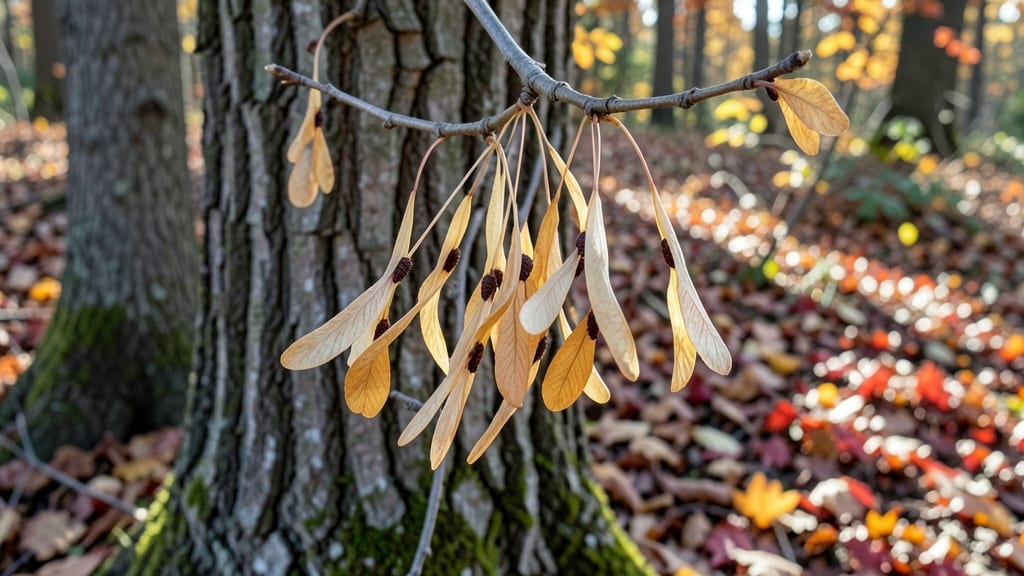
Maple seed identification begins with spotting those wings—sugar maples have broad, rounded ones, while red maples show narrower, sharper points. 🌿 I’ve spent years collecting seeds from forest floors and parks, and the differences become obvious. once you know what to look for.
The size matters too: sugar maple seeds are about 1-2 inches long, while silver maple seeds stretch closer to 3 inches, often with a slightly wavy edge.
Color gives clues too—fresh sugar maple wings are a bright greenish-brown, turning tan as they dry, while red maple wings stay a duller brown.
The key is comparing them side by side: hold a seed against a ruler and note how the shape shifts from wide at the base to narrow at the tip. This isn’t just academic; knowing your seeds helps you propagate the right trees for your yard or support local wildlife.
Once you’ve identified them, collecting seeds is simple: rake up fallen samaras in late summer or early fall when they’re dry but still intact. Store them in paper bags in a cool, dry place until planting season—just don’t let them sit too long, or they’ll lose viability.
You’ll end up with strong saplings that grow faster than nursery-bought trees, and the process connects you to the forest in a whole new way.
This works for backyard gardeners, urban foragers, or anyone curious about native plants. The best part? You’ll start noticing maple seeds everywhere—once you know what to look for, the forest becomes a treasure map. Let’s break down the rest of the details so you can spot them like a pro.
Nature’s Design Triggers Seed Spread
Maple seeds—those iconic "helicopters"—don’t just float randomly. Their unique shape and size are the result of evolutionary adaptations that maximize dispersal efficiency. Understanding why they look and behave the way they do helps explain how they end up in your yard (or your neighbor’s).
Here’s the science behind their airborne antics.
The signature samara (winged seed) design of maples isn’t accidental—it’s a masterclass in physics. The elongated, papery wings create lift and drag in a way that mimics an airplane’s wing profile. Here’s how it works:
- Bernoulli’s Principle in Action: Air moving faster over the curved upper surface of the wing creates lower pressure above it, generating upward lift. This allows the seed to glide without needing much initial force.
- Spin Stabilization: The seed’s slight asymmetry causes it to rotate as it falls, acting like a helicopter’s rotor blades. This delays descent and carries it farther from the parent tree.
- Wind Tunnel Optimization: Studies show maple seeds achieve optimal glide ratios (up to 1:20, meaning they travel 20 feet horizontally for every 1 foot of vertical drop). This is why they often land hundreds of feet from their source.
Pro Tip: 🌡️ The angle of the wing (typically 30–45 degrees) is critical—too steep, and the seed tumbles; too shallow, and it spirals uncontrollably. Nature fine-tuned this over millennia!
Maple seeds aren’t tiny by accident—their weight and size directly influence how far they travel. Here’s the breakdown:
| Factor | Impact on Dispersal | Why It Matters |
|---|---|---|
| Seed Weight | Lighter seeds (0.1–0.3 grams) glide farther. | Heavier seeds fall faster, reducing travel distance. Maple seeds strike a balance—light enough to catch wind but heavy enough to survive impact. |
| Wing Surface Area | Larger wings = more lift. | Species like sugar maples have broader wings for gentler descents, while boxelders (smaller wings) drop seeds faster in turbulent winds. |
| Moisture Content | Drier seeds are lighter and travel farther. | High humidity can weigh seeds down, shortening their flight. That’s why autumn’s crisp air (low humidity) turns your yard into a seed “bombardment zone.” |
Fun Fact: 🎯 Some maple seeds have been recorded traveling over 600 feet in ideal conditions—far enough to colonize new areas and avoid overcrowding with parent trees.
Not all maples release seeds at the same height, and local wind conditions play a huge role in where they land. Here’s how:
- Tree Canopy Height: Taller trees (like sugar maples, which can reach 75+ feet) drop seeds from greater heights, giving them more time to glide. Shorter species (e.g., red maples) release seeds closer to the ground, limiting dispersal.
- Wind Direction and Speed: Seeds released into a steady breeze (5–15 mph) travel farther than in calm or gusty conditions. That’s why you’ll see clusters of seeds in downwind areas of your lawn.
- Obstacles Matter: Buildings, fences, and even other trees can disrupt seed paths, creating “shadow zones” where seeds rarely land. This is why some spots in your yard might be seed-free while others are overrun!
Pro Tip: 💡 If you’re trying to predict where seeds will land, note the prevailing wind direction in your area (check local weather patterns) and observe the tallest maples nearby. Seeds will almost always drift downwind.
Next time you see a maple seed spiraling to the ground, remember: it’s not just falling—it’s engineered to survive and thrive. And now you know the science behind the spectacle! 🌿
Quick fixes for maple seed confusion
Now that you know why maple seed identification can be tricky—whether it’s the whirlwind of helicopter seeds, the mix-up with other tree species, or the challenge of distinguishing between mature and immature seeds—here’s how to solve those problems with ease.
Let’s tackle each issue head-on with practical, step-by-step solutions and prevention tips to keep your identification game sharp.
Problem: Maple seeds (especially the iconic "helicopter" samaras) can resemble seeds from boxelder, ash, or even elm trees, leading to misidentification.
Solution:
- Compare Wing Shape and Size 📏
- Maple samaras have two broad, papery wings that form a wide "V" shape, often 1–2 inches long. They’re symmetrical and slightly curved.
- Boxelder seeds have narrower, less pronounced wings and a more triangular shape.
- Ash or elm seeds usually have single-winged or flatter structures, not the classic double-winged design.
- Check the Seed Attachment 🌱
- Maple seeds attach to the center of the wing pair, creating a balanced look.
- Boxelder seeds often have a lopsided attachment, making the wings appear uneven.
- Look at the Leaf 🍃 (Bonus Verification!)
- If seeds are still attached to a tree, examine the leaf shape. Maple leaves are lobed with serrated edges (like a hand with fingers), while boxelder leaves are more jagged and irregular.
Prevention Tip: 💡 Carry a mini field guide or use a phone app (like iNaturalist or LeafSnap) when hiking or gardening. A quick photo comparison can save guesswork!
Problem: Maple seeds (especially silver maple) spread aggressively, clogging gutters, blanketing lawns, and even sprouting in cracks.
Solution:
- Remove Seeds Before They Mature ⏳
- Collect fallen seeds in late summer/early fall (when they’re green and soft) and dispose of them in a sealed bag.
- Shake them from branches using a long pole or by lightly tapping the tree (if ethical and safe).
- Prune Strategically ✂️
- Trim seed-bearing branches in late winter/early spring (before seeds form). Focus on silver maple, which produces the most prolific seeds.
- Avoid heavy pruning in summer, as it can stress the tree and encourage more seed production.
- Use Physical Barriers 🛡️
- Lay down cardboard or landscape fabric under the tree to block sunlight and prevent germination.
- Install gutter guards to catch seeds before they pile up.
Prevention Tip: 🌡️ Plant less invasive maple varieties like Acer rubrum (red maple) or Acer saccharinum (silver maple) in controlled areas, and mulch heavily to suppress weed growth.
Problem: Green, unripe seeds can look identical to mature brown ones, making it hard to gauge when they’ll drop or sprout.
Solution:
- Check the Color and Texture 🎨
- Mature seeds are brown, dry, and papery with crisp wings.
- Immature seeds are green, soft, and pliable, often still attached to a fleshy base.
- Listen for the "Whirly" Sound 🎶
- Mature maple seeds are lightweight and spin easily in the wind. If a seed doesn’t glide or spiral, it’s likely not ready.
- Observe the Tree’s Timing ⏰
- Most maple seeds mature in late summer to early fall (August–October, depending on the species).
- Silver maple drops seeds earlier (late summer), while sugar maple holds onto them longer.
Prevention Tip: ✨ Mark your calendar for peak seed drop in your area and set reminders to clean up before they germinate!
Problem: Even after identification, unwanted maple seedlings can pop up in your garden or lawn.
Solution:
- Pull Them Early 🌱
- Hand-pull seedlings when they’re small (1–2 inches tall). Use a weeding tool for stubborn roots.
- Avoid herbicides unless necessary, as they can harm other plants.
- Solarize the Soil ☀️
- Cover infested areas with clear plastic sheeting for 4–6 weeks in hot weather. The sun will kill seeds and seedlings.
- Smother with Mulch 🍂
- Apply 3–4 inches of wood chips or straw to prevent light from reaching seeds. Replenish as it breaks down.
Prevention Tip: 🎯 Plant ground covers like creeping thyme or clover under maple trees to outcompete seedlings naturally.
Final Thought: With these simple, actionable steps, you’ll never second-guess a maple seed again—and you’ll keep your yard (and sanity) seed-free! 🌳💨
Frequently asked questions
How can I tell the difference between sugar maple and red maple seeds?
Sugar maple seeds have broader, rounded wings (about 1-2 inches) that form a gentle "V" shape, while red maple seeds feature narrower, sharper wings with more pronounced points. The sugar maple's wings also tend to be slightly wavier at the edges when dry.
When is the best time to collect maple seeds for planting?
Collect seeds in late summer to early fall (August-October) when they're brown and dry but haven't yet fallen to the ground. Silver maple seeds mature earliest, while sugar maple seeds stay on the tree longer. Store them in paper bags in a cool, dry place until spring planting.
Why do some maple seeds spin while others just fall straight down?
Only mature, dry seeds with properly formed wings will spin like helicopters. Immature seeds are too heavy and lack the aerodynamic shape needed for stable rotation. The spinning occurs because of the seed's asymmetrical wing design, which creates lift and rotation as it falls.
Can I plant maple seeds directly where they fall, or should I transplant them?
You can plant them where they fall, but transplanting gives you better control. For best results, soak seeds in water for 24 hours before planting in well-draining soil. Young saplings thrive with 6-8 hours of sunlight daily and should be watered regularly until established.
Are there any lookalike seeds I should avoid confusing with maple?
Watch for boxelder seeds (narrower wings, triangular shape) and ash seeds (single-winged, flatter). Boxelder seeds often have uneven wing attachments, while ash seeds lack the classic double-wing structure. Always check the leaf shape if seeds are still attached to the tree.