
Flowers
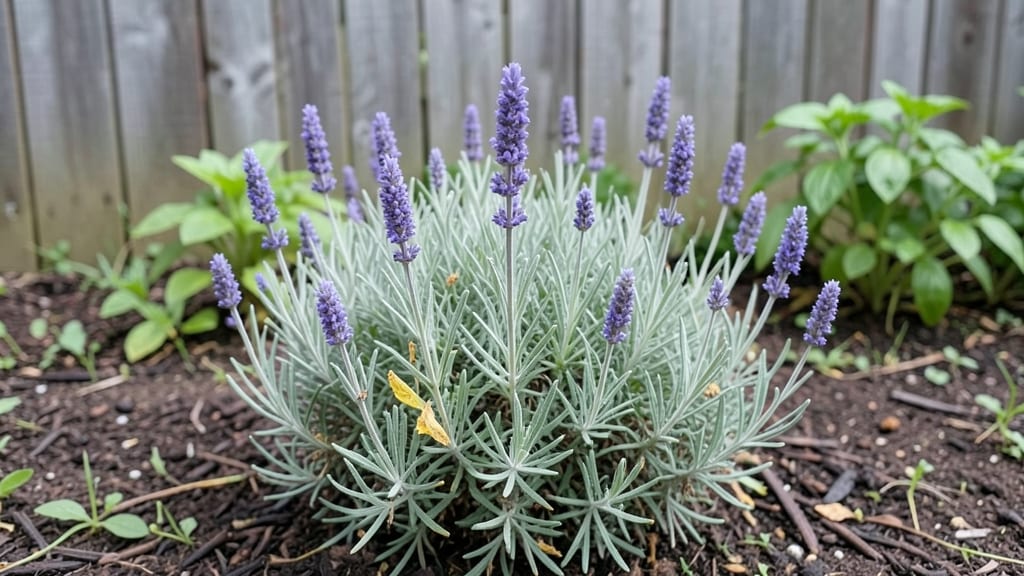
Master lavender seedling identification early to avoid confusing those fuzzy, silvery-gray leaves with rosemary or mint—here’s how to spot the difference. 🌿 fine sandpaper when you brush them, paired with square stems that grow stiffly upright.
These aren’t just pretty details; they’re your first line of defense against misidentification, especially when seedlings are still tiny.
Most beginners overlook the leaf arrangement—lavender’s grow in opposite pairs along the stem, never in whorls like mint or the flat clusters of rosemary. The stems also have a woody texture even when young, a trait that sets them apart from herbaceous seedlings.
If your plant has smooth stems and bright green leaves, it’s not lavender—it’s something else entirely, and that’s okay to admit.
Healthy lavender seedlings should have compact, bushy growth with no yellowing or stretching toward light, which signals weak light conditions. A single sniff of the crushed foliage—if it smells faintly like the lavender you know—confirms you’ve got the right plant.
This isn’t just about avoiding mistakes; it’s about setting your seedlings up for the fragrant, drought-tolerant bushes they’ll become with proper care.
Once you’ve confirmed your seedlings, the next step is giving them the right conditions: full sun, well-draining soil, and minimal water. The payoff? A garden filled with plants that’ll thrive where others fail, and no more second-guessing when you look at your seedlings.
Let’s get those details straight so you can focus on growing what you planted.
Mistaken Identities Explained
Identifying lavender seedlings can be tricky, especially when they’re still young and lack the signature fragrance and color of mature plants. Misidentification often stems from a mix of natural growth patterns, environmental factors, and similarities with other plants.
Let’s break down the key reasons why confusion arises—and how to spot the real culprits.
Young lavender seedlings don’t always look like their adult counterparts. Their leaves are softer, lighter green, and more rounded, which can make them resemble other herbs or weeds. Lavender seedlings also grow slowly at first, with stems that are thin and flexible—far from the woody, upright structure of mature plants.
Why it happens:
- Lack of woody texture: Mature lavender develops thick, woody stems due to lignification (the process of cell wall hardening). Seedlings simply haven’t reached this stage yet.
- Leaf shape evolution: Early lavender leaves are broad and oval, while mature leaves become narrow and gray-green. This transition can be gradual, leading to confusion with plants like rosemary or sage.
- Slow initial growth: Lavender seedlings prioritize root development over top growth, so they may stay low to the ground for weeks, mimicking weeds or ground cover plants.
Actionable tip: 💡 Wait at least 4–6 weeks before attempting identification. If the plant still lacks woody stems and has broad leaves, it’s likely not lavender—or it may be a hybrid or crossbred variety.
Several plants share lavender’s silvery foliage or purple blooms, leading to mix-ups. Without close inspection, seedlings of rosemary, sage, or even some mint varieties can fool even experienced gardeners.
Why it happens:
| Plant | Key Confusion Point | Scientific Reason |
|---|---|---|
| Rosemary | Needle-like leaves and woody stems | Both are in the Lamiaceae family, but rosemary leaves are linear (long and thin) rather than lavender’s lanceolate (spear-shaped) form. |
| Sage | Gray-green, aromatic leaves | Sage leaves are ovate (egg-shaped) and often have a more pronounced serrated edge, while lavender leaves are smooth and slightly fuzzy. |
| Spanish Lavender (Lavandula stoechas) | Similar flowers but different leaf structure | Spanish lavender has bracts (modified leaves) that form a "rabbit ear" shape at the top of the flower spike, absent in English lavender (Lavandula angustifolia). |
Actionable tip: 🔍 Examine the leaf arrangement (lavender grows in opposite pairs) and stem texture. Run your fingers along the leaves—lavender’s are velvety due to tiny hairs (trichomes), while rosemary’s are smooth.
Drought, poor soil, or extreme temperatures can alter a lavender seedling’s appearance, making it look unhealthy or even dead—when it’s just struggling to adapt.
Why it happens:
- Water stress: Overwatering or underwatering causes lavender seedlings to develop chlorosis (yellowing leaves) or necrosis (brown, crispy edges). This can make them resemble diseased plants or weeds.
- Nutrient deficiencies: Lavender thrives in poor, well-draining soil. If planted in rich compost, seedlings may grow lanky and pale, mimicking fast-growing weeds like creeping charlie.
- Temperature shock: Seedlings exposed to frost or heatwaves may develop stunted growth or distorted leaves, delaying the appearance of true lavender traits.
Actionable tip: 🌡️ If your seedling looks off, check the soil moisture (it should be dry to the touch) and ensure it’s in full sun (6+ hours daily). Lavender is drought-tolerant—overwatering is the #1 killer!
Not all "lavender" seeds are true lavender. Many commercial seed mixes contain lavandin (a lavender-hybrid) or even lavender-like annuals (e.g., Lavandula × intermedia), which grow differently.
Why it happens:
- Hybrid vigor: Lavandin hybrids (e.g., Grosso) grow taller and bushier than English lavender, with broader leaves and larger flowers. Their seedlings may not resemble classic lavender at all.
- Mislabelled packets: Some seed companies sell "lavender" blends that include dwarf lavender (Lavandula × hedera) or Spanish lavender, which have distinct growth habits.
- Annual lavender impostors: Plants like Lantana or Salvia may be sold as "lavender" due to purple blooms, but their leaves and stems are entirely different.
Actionable tip: ✨ If you bought seeds, check the botanical name on the packet. True English lavender (Lavandula angustifolia) is the most reliable for identification. For hybrids, note that their seedlings may take 2+ years to show true characteristics.
Fixing Mistaken Lavender Seedlings
Got a plant that looks like lavender but isn’t quite right? Don’t panic—misidentification is common, and there are clear steps to correct it. Below, we’ll tackle the most frequent issues with lavender seedling identification and provide actionable fixes, plus tips to keep your garden thriving.
🌱 Problem: wrong plant type (not true lavender)
Cause: You’ve planted something that resembles lavender but isn’t—like rosemary, sage, or even mint.
Fix:
- Compare Leaves & Stems
- True lavender has gray-green, narrow leaves with square stems (if cut, they’ll show a slight four-sided shape).
- False positives?
- Rosemary: Needle-like leaves, woody stems, and a piney scent.
- Sage: Oval leaves, often fuzzy, with a strong earthy aroma.
- Mint: Opposite leaves, square stems, and a strong minty smell.
- Smell Test
- Crush a leaf—lavender smells floral and slightly sweet, while others have distinct herbal or medicinal scents.
- Dig Deeper (Literally)
- Pull up the seedling and check the root system. Lavender has fibrous, shallow roots, while many mimics have deeper taproots.
Prevention Tip: 💡 Buy from reputable nurseries or grow from certified lavender seeds to avoid lookalikes.
🌿 Problem: leggy or weak seedlings (poor growth)
Cause: Overcrowding, weak light, or improper soil drainage is stunting your seedlings.
Fix:
- Thin Out Seedlings
- Space them 12–18 inches apart to prevent competition for nutrients.
- Boost Light Exposure
- Lavender needs full sun (6+ hours daily). Move seedlings to a sunnier spot or use a grow light if indoors.
- Improve Soil Drainage
- Lavender hates soggy roots. Mix sand or perlite into potting soil (or plant in well-draining gravelly soil).
Prevention Tip: ✨ Start seeds in small pots before transplanting to avoid overcrowding.
🐛 Problem: pest or disease damage (misidentified as lavender)
Cause: Spider mites, aphids, or fungal issues can distort leaves, making identification harder.
Fix:
- Inspect for Pests
- Spider mites? Look for tiny webs on undersides of leaves.
- Aphids? Check for sticky residue (honeydew) and curled leaves.
- Treat Naturally
- Neem oil spray (1 tsp neem oil + 1 quart water) for pests.
- Prune affected leaves to stop spread.
- Fungal Issues?
- Powdery mildew? Spray with baking soda mix (1 tsp baking soda + 1 quart water + a drop of dish soap).
Prevention Tip: 🌡️ Water at the base (not leaves) to prevent fungal growth.
🌞 Problem: wrong climate or season (seedlings struggling)
Cause: Lavender is drought-tolerant but frost-sensitive. Planting at the wrong time or in high humidity can stress seedlings.
Fix:
- Best Planting Time
- Spring or early fall (avoid summer heatwaves or winter frosts).
- Hardiness Check
- Most lavender (English lavender) thrives in USDA Zones 5–9. If you’re in a colder zone, choose hardy varieties like Lavandula angustifolia.
- Mulch Lightly
- Use gravel or pebbles (not organic mulch) to retain heat and improve drainage.
Prevention Tip: 🎯 Research your local climate—some lavender types (like Spanish lavender) prefer warmer areas.
Final Thought: 🌟 When in doubt, snap a photo and compare it to a lavender identification guide. Most mistakes happen because we rush—take your time, and your garden will thank you!
Frequently asked questions
How can I tell if my young plant is really lavender?
Look for opposite leaf pairs along square stems and velvety gray-green leaves. Rub them between your fingers—lavender feels like fine sandpaper. If the scent is faintly floral (not piney or minty), that’s another clue. True lavender seedlings also grow slowly at first, focusing on roots before shooting upward.
Why does my lavender seedling look like rosemary?
Both are in the mint family, but rosemary has needle-like leaves and a piney aroma. Lavender’s leaves are broader when young and develop a fuzzy texture from tiny hairs. Check the stem too—rosemary’s is woody even as a seedling, while lavender stays soft until mature.
What should I do if my lavender seedling has yellow leaves?
Yellowing often means overwatering or nutrient burn. Lavender thrives in poor soil—too much fertilizer causes this. Let the soil dry completely between waterings and avoid rich compost. If the yellowing spreads, check for pests like spider mites on leaf undersides.
Can I grow lavender from store-bought seeds?
Some store seeds are hybrids (like lavandin) that won’t look like classic lavender. For true English lavender, buy from specialty nurseries. If you’re unsure, check the botanical name on the packet—Lavandula angustifolia is the most reliable for identification.
How long until I can be sure it’s lavender?
Wait 4-6 weeks—young lavender starts woody and develops narrower leaves as it matures. By 3 months, the fragrance should be unmistakable. If it still looks like mint or sage, it’s not lavender—time to replant!