Trees
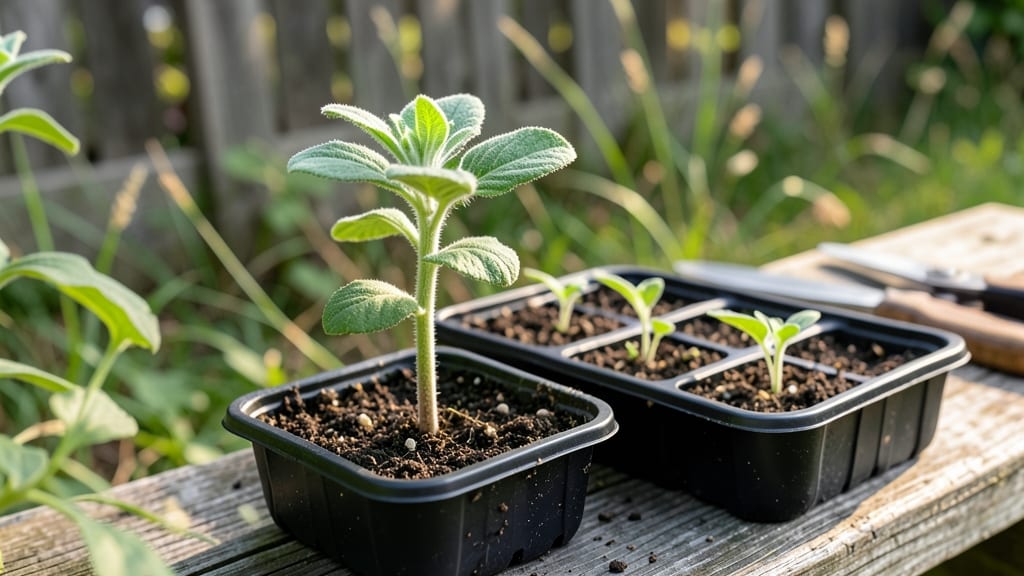
Mastering borage seedling identification early means sparing yourself the hassle of weeding out the very plants you’re trying to nurture—those fuzzy, starburst leaves in a tight rosette at ground level. 🌱 I’ve pulled up "weeds" that turned out to be baby borage plants because I didn’t recognize this signature fuzzy texture.
The stems are another dead giveaway: they’re hairy too, with a slightly square shape when you look closely. Young seedlings stay low to the ground at first, but once they hit about 2 inches tall, those star-shaped leaves start spreading wider than they do tall.
Compare this to weeds like lamb’s quarters, which have smooth leaves and a more upright growth habit.
By the time they’re 4-6 inches tall, you’ll see the classic borage look—hairy stems, fuzzy leaves, and a slightly blue-green tint that deepens as they mature. The key is catching them before they get crowded; thin them to 12-18 inches apart when they’re still small to avoid competition.
Mature borage plants develop those iconic blue star-shaped flowers, but the seedlings are all about the fuzzy, star-shaped leaves and hairy stems. Once you spot these clues, you’ll never mistake them for weeds again—and you’ll get a head start on a plant that’s both beautiful and edible.
Mistakes in Spotting Young Borage
Identifying borage seedlings can be tricky, especially when their delicate features blend into garden beds or wild patches. Misidentification often stems from overlooking key botanical traits or confusing them with similar-looking plants. Here’s why these errors happen—and how to avoid them.
Borage seedlings have hairy, oval leaves with serrated edges, arranged alternately along the stem. Many gardeners mistake them for young comfrey (Symphytum spp.) or even wild violet seedlings because of their fuzzy texture. The confusion arises when:
- Leaves aren’t fully unfurled: Early-stage borage leaves may appear rounder or less jagged, mimicking other plants like Borago officinalis (its own cousin!) or even Lamium (dead-nettle). Pro tip: Look for the distinctive star-shaped hairs under a magnifying glass—borage’s leaves are uniquely pubescent.
- Lighting conditions distort shapes: Shadows or low sunlight can soften serrations, making leaves look smoother. Actionable fix: Examine seedlings on a cloudy day when details are sharper.
Borage seedlings have slender, branching stems covered in fine hairs, often growing in a prostrate or slightly upright pattern. Common mix-ups occur because:
- Stems are too delicate to notice: Young borage stems can resemble those of Plantago (plantain) or Chenopodium (lamb’s quarters) when viewed from a distance. Key clue: Borage stems lack the red or purple tinge seen in some weeds.
- Rapid growth confuses timing: Borage seedlings bolt quickly in warm weather, making their early stages fleeting. Solution: Monitor seed trays or garden beds daily during germination windows (50–70°F soil temps).
While mature borage boasts bright blue, star-shaped flowers, seedlings lack this signature trait—leading to errors. The most frequent blunders involve:
- Mistaking seedlings for Heliotropium or Lobelia: Both have fuzzy leaves but produce different flower colors (white/purple vs. blue). Avoid this: Wait until seedlings develop 3–4 true leaves before assuming identity.
- Over-relying on flower presence: Some gardeners dismiss seedlings because they haven’t bloomed yet. Remember: Borage flowers appear 6–8 weeks after germination—patience is key!
Stress from poor soil, pests, or weather can alter borage seedlings’ appearance, making them harder to ID. Watch for:
- Nutrient deficiencies: Low phosphorus causes darker green, stunted leaves with fewer serrations, resembling Spinacia (spinach) seedlings. Fix: Use a balanced fertilizer (10-10-10) if growing in containers.
- Pest damage: Aphids or spider mites distort leaf shapes, creating crinkled or irregular edges. Prevent: Spray seedlings with neem oil at the first sign of infestation.
- Temperature swings: Cold snaps (<40°F) slow growth, producing smaller, rounder leaves that mimic Portulaca (purslane). Adjust: Start seeds indoors if your climate dips below 50°F.
💡 Pro Tip: Keep a seedling ID chart nearby with side-by-side comparisons of borage vs. lookalikes. Snap photos of your seedlings at each growth stage for future reference!
Quick Fixes for Common Borage Seedling Confusion
Identifying borage seedlings can be tricky, especially when they resemble other plants or face environmental stress. Below are practical, step-by-step solutions to common issues—from misidentification to growth problems—along with prevention tips to keep your seedlings thriving.
If your borage seedlings are blending in with weeds or look suspiciously like other garden plants, here’s how to tell them apart and act fast.
🔥 Step 1: Compare Leaf Shapes
Borage seedlings have hairy, jagged-edged leaves that resemble tiny starbursts. If yours look smooth or lobed (like dandelions or lamb’s quarters), they’re likely impostors.
- Action: Snip off suspicious seedlings and compare them side by side with a known borage plant.
- Pro Tip: 💡 Use a magnifying glass to check for the distinctive hairiness on borage stems—weeds rarely have this trait.
🍳 Step 2: Check the Stem and Growth Pattern
Borage seedlings grow in a sprawling, slightly woody pattern. If stems are thin, brittle, or upright (like amaranth), they’re not borage.
- Action: Gently tug the seedling—borage roots are shallow but fibrous. Weeds often pull out cleanly.
- Pro Tip: 🌡️ Plant borage in well-drained soil to prevent leggy growth, which can make identification harder.
🎯 Prevention: Label and Isolate Seedlings
To avoid future mix-ups:
- 📌 Place small biodegradable flags near seedlings to track their progress.
- 🌱 Start borage in containers first to monitor growth before transplanting.
Slow germination or weak, stretched seedlings usually stem from environmental factors. Fix these issues before it’s too late.
🔥 Step 1: Adjust Soil Temperature and Moisture
Borage seeds need consistent warmth (60–70°F) and moist (not soggy) soil to sprout. Cold or dry conditions slow them down.
- Action: Cover seeds with a clear plastic dome or row cover to retain heat and humidity.
- Pro Tip: ⏰ Soak seeds overnight before planting to boost germination speed.
👨🍳 Step 2: Provide Proper Light
Leggy seedlings mean they’re stretching for light. If placed too far from a window or under weak grow lights, they’ll become weak and floppy.
- Action: Move seedlings to a sunny spot (6+ hours of light/day) or use a grow light 2–3 inches above them.
- Pro Tip: ✨ Rotate trays daily to ensure even growth and prevent leaning.
🔪 Step 3: Thin Seedlings Early
Overcrowded seedlings compete for nutrients, leading to weak stems and poor identification traits.
- Action: Thin seedlings to 6–8 inches apart once they have 2–3 true leaves.
- Pro Tip: 🌱 Use the thinned seedlings in salads or teas—young borage leaves are edible!
✨ Prevention: Start with Fresh Seeds
Old seeds (over 1–2 years) often germinate poorly. For best results:
- 📊 Store seeds in a cool, dry place (like the fridge) to extend viability.
- 💪 Use organic seed-starting mix for faster, healthier germination.
Caterpillars, aphids, or fungal issues can distort borage seedlings, making identification difficult. Act quickly to protect your plants.
🔥 Step 1: Inspect for Common Pests
Look for chewed leaves, sticky residue (aphids), or tiny holes (caterpillars). Borage is attractive to pests but can bounce back with care.
- Action:
- 🔪 Handpick caterpillars or large pests.
- 💦 Spray with neem oil or insecticidal soap for aphids.
- Pro Tip: 🌡️ Avoid overhead watering to prevent fungal diseases like powdery mildew.
🍳 Step 2: Boost Seedling Resilience
Healthy seedlings resist pests better. Strengthen them with:
- 🌱 A balanced fertilizer (5-5-5) once true leaves appear.
- 💪 Compost tea to enhance root and stem vigor.
🎯 Prevention: Companion Planting
Surround borage with repellent plants like:
- 🌿 Marigolds (deter pests naturally).
- 🌱 Basil or thyme (confuse pests with strong scents).
With these fixes, your borage seedlings will grow distinctive, healthy, and easy to identify. Happy gardening! 🌱🔍
Frequently asked questions
How do I distinguish borage seedlings from common weeds like lamb’s quarters?
Borage seedlings have hairy, fuzzy leaves with serrated edges that form a starburst shape, while lamb’s quarters have smooth, triangular leaves. Check the stems too—borage stems are covered in fine hairs and grow in a sprawling pattern, unlike the upright, smooth stems of weeds.
Why do my borage seedlings look different from the pictures I’ve seen?
Early-stage seedlings may appear rounder or less fuzzy due to lighting or stress. Look for the distinctive hairiness on stems and leaves under magnification—this is the key trait. Also, nutrient deficiencies or pests can distort leaf shapes, so inspect closely for damage or discoloration.
When will borage seedlings develop their signature blue flowers?
Borage flowers typically appear 6–8 weeks after germination, but seedlings focus on leaf development first. The fuzzy, star-shaped leaves are your best clue early on—wait until they’re 4–6 inches tall before expecting blooms, especially in cooler climates.
Can I transplant borage seedlings too early, and how do I know when they’re ready?
Transplant when seedlings have 3–4 true leaves and are at least 2–3 inches tall. Avoid transplanting before this stage—they’re fragile and may struggle. Harden them off for 5–7 days by gradually exposing them to outdoor conditions before moving to the garden.
What should I do if I accidentally pull up a borage seedling thinking it was a weed?
Don’t panic! If you’ve pulled a small seedling, replant it immediately in a pot with well-draining soil and keep it moist. Larger seedlings may not recover, but young ones often bounce back. Next time, use a magnifying glass to check for the fuzzy hairs that give borage away!