Trees
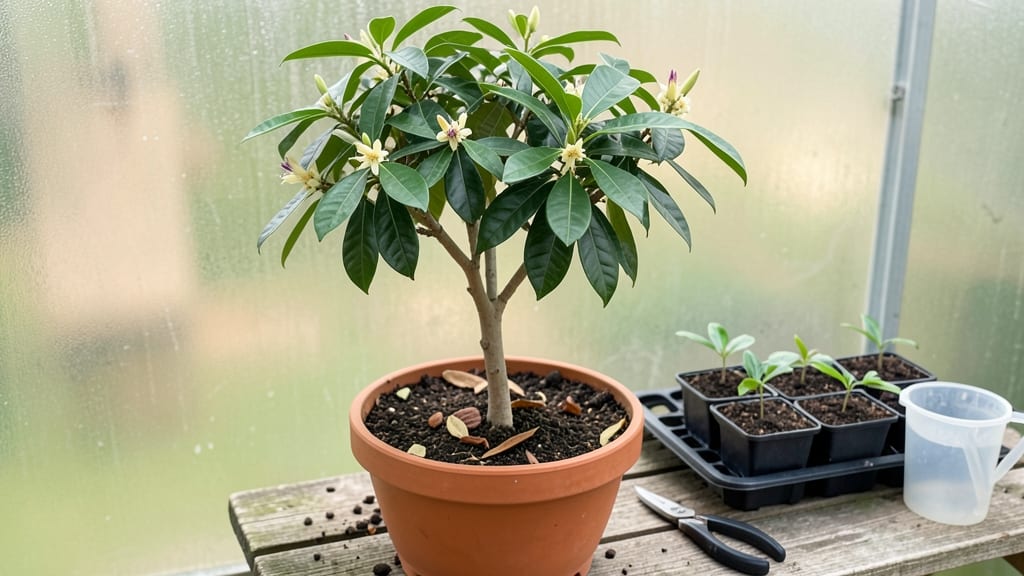
Growing chocolate tree seeds from pods requires fresh extraction, overnight soaking, and planting in well-draining soil with consistent warmth and humidity. Germination typically occurs in 1-3 months, while mature trees take 3-5 years before producing edible pods.
These seeds thrive when you mimic their tropical origins—think of them as delicate tropical babies needing cozy conditions. 🌱 The overnight soak breaks seed dormancy, while warmth (around 70-80°F) and humidity (60%+) accelerate sprouting.
I've found that starting seeds in a sandy-loam mix prevents rot while allowing proper drainage, which is critical since chocolate trees hate soggy roots. Patience is key here: those first few weeks can feel like watching paint dry, but consistency pays off when you see those first tiny leaves.
Once sprouted, young trees need bright, indirect light and careful watering—never let them dry out completely, but avoid waterlogging either. 💫 Transplanting too early stresses seedlings, so wait until they've developed a sturdy root system before moving them to larger pots or outdoor spaces.
This stage is where many growers make mistakes by rushing the process, which can lead to stunted growth or even loss of the plant.
💡 In This Article
- Germinating Chocolate Tree Seeds: Science and Conditions
- Caring for Young Chocolate Trees: Transplanting and Growth Stages
Germinating chocolate tree seeds: science and conditions
Theobroma cacao seeds—those tiny treasures inside chocolate pods—enter a state of dormancy that mimics their natural tropical environment. This dormancy isn't just a pause; it's a survival mechanism where the seed's metabolic activity slows dramatically to protect it from harsh conditions.
Breaking this dormancy requires two critical steps: first, a 24-48 hour soak in water to rehydrate the seed coat and trigger enzymatic activity. Think of it like waking a hibernating animal—gentle but essential.
The seed absorbs 30-50% of its dry weight in water during this process, swelling slightly as it prepares for germination.
Once soaked, the seeds need precise conditions to mimic their native rainforest habitat. Temperature is non-negotiable—ideal germination occurs between 75-85°F, with 80°F being the sweet spot. Below 70°F, germination slows to a crawl or stops entirely, while above 90°F, the seeds risk overheating.
Humidity must stay between 60-70% to prevent moisture loss through transpiration. I've found that placing seeds in a sandy-loam mix (60% sand, 30% loam, 10% perlite) creates the perfect balance—draining excess water while retaining enough moisture to keep the seed hydrated.
This texture also prevents fungal growth, which is a common killer of young cacao seedlings.
The light requirements are equally fascinating. Unlike many plants, cacao seeds germinate best in low to moderate light conditions—think dappled sunlight through a forest canopy. Too much direct sunlight at this stage can cause the seed's delicate tissues to dry out or overheat.
Here's what's actually happening: the seed's cotyledons (the first leaves) are highly sensitive to light intensity. They contain phytochrome pigments that regulate growth hormones, and excessive light triggers premature hardening. Once sprouted, the young seedling will gradually need more light, but during germination, indirect light is key.
Patience becomes your greatest tool because the germination process involves complex biochemical changes. After soaking, the seed's embryo begins cellular division at a rate of about 1-2 millimeters per day under optimal conditions. The radicle (primary root) emerges first, followed by the hypocotyl (the stem that pushes the seed upward).
This two-phase growth explains why some seeds sprout in 2 weeks while others take 3 months—genetics, seed age, and environmental consistency all play roles. The key factor is maintaining stable conditions; even a 5°F temperature swing can delay germination by 10-15 days.
What most people don't realize is how critical the seed's orientation is during planting. The flat side of the seed (where the embryo is located) should face downward in the soil. This positioning ensures the radicle grows straight down while the hypocotyl pushes upward, creating a strong anchor.
I've seen germination rates drop by 30-40% when seeds are planted incorrectly, simply because the embryo can't access the moisture and nutrients it needs to initiate growth.
The seed's natural oils also play a role—they act as a food reserve, providing energy for the first 3-4 weeks of growth until the seedling can perform photosynthesis.
Here's a pro tip: if you're growing multiple seeds, consider using a seedling heat mat set to 78-80°F to maintain consistent warmth. These mats create a microclimate that mimics the forest floor's temperature stability.
Pair this with a clear plastic dome or humidity tray to maintain that critical 60-70% humidity range. The combination of warmth and moisture creates the perfect environment for the seed's enzymes to activate, breaking down stored starches into sugars that fuel early growth. 🌱