Propagation
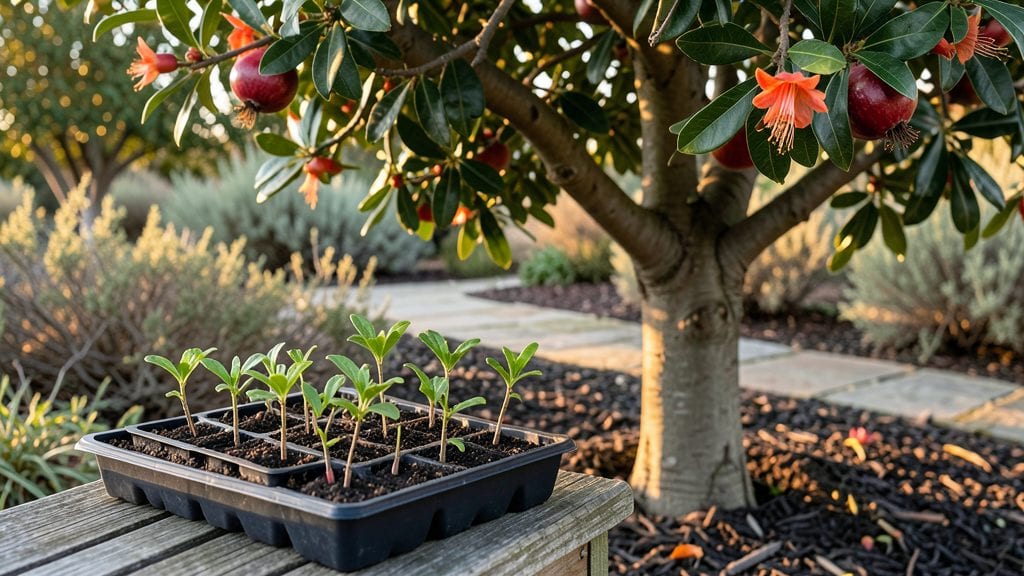
Growing a pomegranate tree from seed starts with a handful of ruby-red jewels from your grocery store fruit. 🌱 I’ve watched these tiny seeds transform into thriving trees that produce fruit in just 3-5 years—no nursery plant needed.
The trick isn’t complicated, but it does require patience and a few key steps to coax those seeds awake.
First, you’ll need a warm spot (around 70-75°F) and a little help breaking their dormancy. Most seeds need stratification—a cold period—to germinate, but pomegranate seeds are different. They prefer warmth first, then a short cold snap to mimic their natural growing cycle.
Once you’ve got your setup ready, germination can happen in as little as 2-4 weeks with the right conditions.
What you’ll end up with is a sturdy young tree that thrives in full sun and well-draining soil. By the time it’s a year old, you’ll see those first deep green leaves and a woody stem ready for transplanting.
The best part? These trees are drought-tolerant once established, making them perfect for low-maintenance gardens.
Fair warning: early growth can be slow, and not every seed will sprout. But when you finally see that first bloom—pink and delicate—you’ll know it was worth the wait. Here’s how to get started without the guesswork.
📚 In This Guide
- What you need
- Instructions
- Tips and common mistakes
- Wrapping up and next steps
What you need
- ● Pomegranate seeds: 3–5 fresh, plump seeds (harvested from a ripe, organic pomegranate for best results).
- ● Well-draining potting mix: 1 small pot (4–6 inches in diameter) filled with a mix of 50% cactus/succulent soil and 50% perlite or coarse sand (sterilized).
- ○ Seed-starting tray or small container: With drainage holes (optional but helpful for humidity control).
- ● Plastic wrap or humidity dome: To create a mini greenhouse effect.
- ● Spray bottle: For gentle watering (avoid soaking!).
- ● Grow lights or sunny windowsill: Pomegranate seeds need bright light (6+ hours/day) to germinate.
- ● Patience! Germination can take 2–4 weeks (or longer).
- ● Seedling heat mat (70–85°F) to speed up germination.
- ● Fertilizer (balanced 10-10-10, diluted to half-strength) for young seedlings.
- ● Pruning shears (for future shaping—pomegranate trees can get 10–15 feet tall!).
- ● Labeled markers to track seed varieties (if experimenting with different types).
Step-by-step instructions for growing pomegranates from seed
Here's how to turn those jewel-like seeds into a thriving tree—patience and warmth are your best tools.
🌱 Step 1: Extract and Prepare the Seeds
Start with fresh pomegranate seeds—they germinate best when harvested within a few days of eating. Scoop them out of the fruit and rinse them under cool water to remove any lingering pulp. Spread them on a clean paper towel to dry completely, which prevents mold and speeds up the next step.
Once dry, place the seeds in a small bowl and cover them with lukewarm water for 24 hours. This softens the hard outer coating and kickstarts germination. I like to swirl them gently every few hours to keep them submerged. After soaking, drain the water and let the seeds air-dry again for another 12 hours.
💧 Step 2: Plant the Seeds in Moistened Soil
Fill a small pot—about 3-4 inches deep—with a light, well-draining potting mix. Moisten it until damp but not soggy; you want it to hold moisture without pooling at the bottom. Press the soil down lightly to create a firm surface for the seeds.
Plant the seeds ½ inch deep, spacing them about 1 inch apart in the pot. Cover them lightly with a thin layer of soil, just enough to obscure their shape. Water gently with a spray bottle until the soil feels evenly moist. Place the pot in a warm spot—ideally 70-80°F—where it can stay consistently warm.
☀️ Step 3: Provide Warmth and Indirect Light
Pomegranate seeds need warmth to germinate, so place the pot on a seedling heat mat or in a sunny windowsill. If using a heat mat, keep the soil temperature at 75-85°F—this is critical for breaking dormancy. You’ll see tiny sprouts in 2-4 weeks, though some seeds may take up to 6 weeks.
Once the first true leaves appear—those are the second set after the initial seed leaves—move the seedlings to a bright spot with indirect sunlight. Direct sun can scorch tender new growth, so a south-facing window with sheer curtains works well. Avoid cold drafts, as pomegranates are sensitive to temperature swings.
🪴 Step 4: Transplant and Care for Young Seedlings
When the seedlings reach about 4-6 inches tall and have developed 4-5 true leaves, it’s time to transplant them into individual pots. Use pots that are 6-8 inches deep with drainage holes. Fill them with the same well-draining potting mix and dig a hole deep enough to bury the seedling up to its first set of true leaves.
Water the transplanted seedlings gently to settle the soil around the roots, but avoid overwatering. Let the top inch of soil dry out between waterings. Place the pots in a spot with full sun (6+ hours daily) and gradually introduce them to outdoor conditions if you're growing in a temperate climate. Harden them off over 1-2 weeks before moving them permanently outside in spring.
Tips & tricks for perfect pomegranate seed germination
Patience and precision are your best friends when growing pomegranates from seed—here's how to maximize your success with these simple strategies.
Soaking Secrets: The 24-hour soak in lukewarm water is non-negotiable for breaking the seed's tough outer shell. I've found that using a bowl with slightly warm water (around 80°F) helps maintain consistent temperature throughout the process. After draining, let those seeds air-dry for the full 12 hours—this prevents mold and gives you a better germination rate. Trust me on this: skipping either step means fewer sprouts.
Temperature Matters: Maintaining that 75-85°F range during germination is absolutely critical. I use a seedling heat mat set to 80°F for the first 24 hours, then move to a sunny windowsill. If your home stays cooler than 70°F, consider placing the pot on top of your refrigerator (not inside) to create a warm microclimate. The seeds need this warmth to break dormancy—without it, you might wait months for sprouts or never see them at all.
Lighting Strategy: Once those first true leaves appear, move your seedlings to bright indirect light immediately. I place mine under a grow light on a 14-hour cycle for the first week, then transition to a south-facing window. Direct sunlight can scorch those delicate leaves, so if you're using natural light, sheer curtains are your friend. Pomegranates are sun lovers, but baby seedlings need gentle introduction to full sun.
Transplanting Timing: Wait until your seedlings reach 4-6 inches with 4-5 true leaves before transplanting—this gives them strong enough roots to handle the move. I always use pots with drainage holes (6-8 inches deep) and bury the seedlings up to their first set of true leaves. This helps prevent stem rot while encouraging root growth. Don't rush this step—patience now means stronger trees later.
Pro Tips for Pomegranate From Seed
- Patience and precision are your best friends when growing pomegranates from seed—here's how to maximize your success with these simple strategies.
- Soaking Secrets: The 24-hour soak in lukewarm water is non-negotiable for breaking the seed's tough outer shell.
- Temperature Matters: Maintaining that 75-85°F range during germination is absolutely critical.
Frequently asked questions
Got questions about growing pomegranates from seed?
You’re not alone! Here are answers to the most common queries to help you succeed—whether you’re a first-time gardener or a seasoned green thumb.
How long does it take for pomegranate seeds to germinate?
Patience is key! Pomegranate seeds typically take 2–4 weeks to sprout under ideal conditions (warmth, moisture, and indirect light). Some stubborn seeds may take up to 6–8 weeks. Keep the soil consistently damp but not soggy—germination speed depends on seed freshness and environmental factors.
Do pomegranate seeds need scarification or stratification?
Nope! Unlike some fruits, pomegranate seeds don’t require scarification or cold stratification to germinate. Their hard outer shell softens naturally with moisture and warmth. Just soak seeds for 12–24 hours in lukewarm water before planting to speed up the process—optional but helpful for faster sprouting.
When will my pomegranate tree produce fruit from seed?
Brace yourself for a wait! Pomegranate trees grown from seed can take 5–10 years to bear fruit, depending on climate, care, and variety. Unlike grafted trees (which fruit in 3–5 years), seed-grown trees prioritize root and branch development first. Choose a sunny spot and stay patient—your efforts will pay off!
Can I grow a pomegranate tree indoors from seed?
but with caveats. Start seeds indoors near a sunny window or grow light and transplant outdoors once roots establish (spring/summer). Pomegranates thrive in USDA Zones 7–11—if you’re in a colder zone, grow it in a large container and bring it inside during winter. Just ensure it gets 6+ hours of sunlight daily!
Why aren’t my pomegranate seeds sprouting?
Don’t panic! Common culprits include:
- Cold soil: Seeds need warmth (70–80°F) to germinate. Use a heat mat if your home is chilly.
- Dampness issues: Overwatering can rot seeds; underwatering halts growth. Aim for moist (not wet) soil.
- Old seeds: Fresh seeds sprout better. If yours are dried out, try soaking them longer or planting more.
- Low light: Seeds need indirect light to break dormancy. A bright windowsill or grow light helps.
Wrapping up and next steps
Growing a pomegranate tree from seed is a rewarding journey that blends patience with the joy of nurturing life! 🌱 With the right materials, patience, and a dash of care, you can cultivate a thriving tree that may even produce fruit in time.
Whether you’re a beginner or a seasoned gardener, this process is a fantastic way to connect with nature—and maybe even enjoy homegrown pomegranates someday.
Ready to take the next step? Start with your seeds today and watch your green thumb grow! If you hit a snag, revisit our FAQs or experiment with adjustments—every gardener learns by doing. Happy planting! 🌿