Vegetables
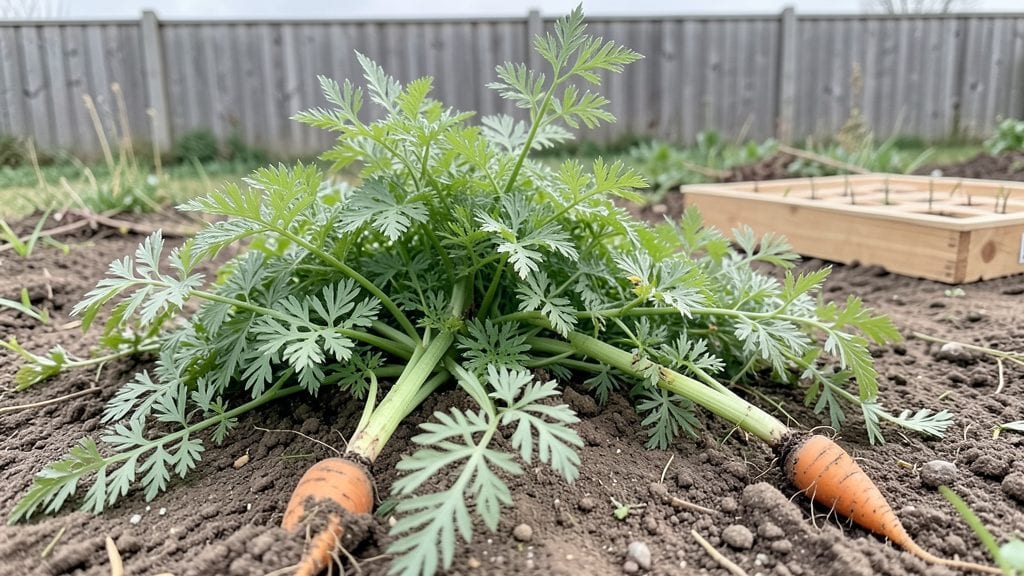
Getting the carrot seed depth right is the secret to growing those crisp, perfectly shaped roots you’ve been dreaming of 🥕 — and one wrong move can leave you with a patch of sad, forked nubs.
Planting carrots too deep or too shallow can turn your dream harvest into a disappointing mess—here’s the exact carrot seed depth rule to grow perfectly straight, sweet roots every time.
Most gardeners assume deeper means better, but the truth is, carrots need just enough soil to cozy up without suffocating. We’re talking a ¼-inch to ½-inch depth, no more, no less—unless you’re dealing with heavy clay or sandy soil, which changes the game.
In this guide, you’ll learn the ideal depth for your soil type, how to adjust for climate, and the simple tools that make planting foolproof—so you can skip the guesswork and enjoy a harvest of restaurant-quality carrots.

The ideal carrot seed depth for maximum germination and root growth
Getting the carrot seed depth right is the secret to growing straight, sweet roots instead of gnarled, forked disappointments. Too shallow, and seeds dry out before sprouting. Too deep, and they struggle to reach the surface, often rotting in the soil.
The sweet spot for most carrot varieties is between ¼ to ½ inch deep, but why does this range work—and what happens if you miss the mark?
Carrot seeds are tiny and packed with nutrients to fuel early growth, but they need just enough soil coverage to stay moist while still having the energy to push through.
Studies show that seeds planted at ¼ inch depth germinate fastest in ideal conditions, while deeper planting (over ½ inch) can delay emergence by 5-7 days, giving weeds a head start. The key is balancing moisture retention with the seed's ability to break through the soil barrier.
Soil temperature also plays a critical role. Carrot seeds germinate best in soil that's 60-70°F, but cooler soils (50°F) slow germination significantly. If you're planting in early spring or fall, aim for the shallower end (¼ inch) to help seeds sprout faster.
Warmer soils (>75°F) can cause seeds to germinate too quickly, leading to weak seedlings that struggle to establish roots.
Moisture is just as crucial as depth. After planting, keep the soil consistently moist but not soggy—watering lightly every 2-3 days until germination. Overwatering can cause seeds to rot, while underwatering leads to crusty soil that blocks sprouts.
A fine mist or drip irrigation works best to maintain even moisture without disturbing the seeds.
Now, let’s break down the science behind the ideal carrot seed depth and how to apply it in your garden.
If you plant carrots too shallow (less than ¼ inch), they risk drying out before sprouting, especially in dry or sandy soils. This is why many gardeners use a light covering of soil or compost—just enough to hold moisture without suffocating the seeds.
In contrast, planting too deep (over ½ inch) forces the seedling to expend precious energy pushing upward, often resulting in weak, leggy plants that fork or split as they grow.
Another critical factor is soil type. In clay-heavy soils, which compact easily, aim for the shallower end (¼ inch) to prevent seeds from being buried too deeply when watered. For sandy soils, which dry out quickly, a slightly deeper planting (½ inch) helps retain moisture.
Always loosen the soil before planting to create an ideal seedbed—carrots hate compacted soil, which causes forking and stunted growth.
Pro tip: Use a seed tape or spacing tool to ensure even depth and spacing. These tools eliminate guesswork, especially for beginner gardeners. For example, the VeggieTape system embeds seeds at the perfect depth while maintaining 2-inch spacing—ideal for small gardens or containers.
Even without tools, a simple ruler or your finger can help gauge depth accurately.
Once seeds germinate, thin seedlings to 2–3 inches apart to give roots room to grow straight. Overcrowding leads to competition for nutrients, resulting in small, misshapen carrots.
If you’re growing short varieties (like Paris Market), you can thin slightly closer (1–2 inches), but never sacrifice depth for spacing—consistency is key.
Finally, monitor soil moisture closely after thinning. Carrots need 1–1.5 inches of water per week, delivered deeply rather than superficially. Mulch with straw or shredded leaves to retain moisture and suppress weeds, which can outcompete young carrot seedlings.
With the right carrot seed depth and care, you’ll harvest straight, sweet roots in just 60–80 days!
How to adjust carrot seed depth for different soil types and climates
Your carrot seeds need the right depth to grow into those crisp, sweet roots you crave—but that depth changes based on your soil type and climate zone. Sandy soil drains too fast, while clay holds moisture like a sponge, and cold climates demand extra care.
Let’s break down the perfect carrot seed depth for your garden’s unique conditions.
In loose, well-drained soil, the standard ¼-inch depth works perfectly. But if your garden is heavy clay or sandy, you’ll need to adjust.
For example, sandy soil requires shallower planting (⅛-inch max) to prevent seeds from drying out, while clay soil benefits from slightly deeper placement (½-inch) to protect tender sprouts. Even your climate zone plays a role—cooler regions may need deeper planting to shield seeds from frost.
🌱
For container gardening, stick to the ⅛-inch depth rule—potted carrots dry out faster, so shallower planting helps retain moisture. Use a deep container (12+ inches) to accommodate full-sized roots.
If you’re in a cold climate, consider starting seeds indoors or using row covers to protect young plants from frost.
Precision tools like seed tapes or a seed depth gauge can help you plant at the exact depth every time. Simply press the tape into the soil or use the gauge to mark rows before sowing.
This eliminates guesswork and ensures consistent germination, even if you’re planting in less-than-ideal conditions.
Remember, soil temperature matters too—carrot seeds need soil that’s at least 50°F to germinate. In cooler climates, wait until the soil warms up or use a seedling heat mat for faster sprouting. With these adjustments, you’ll grow straight, sweet carrots no matter your garden’s challenges.
🌿