
Flowers
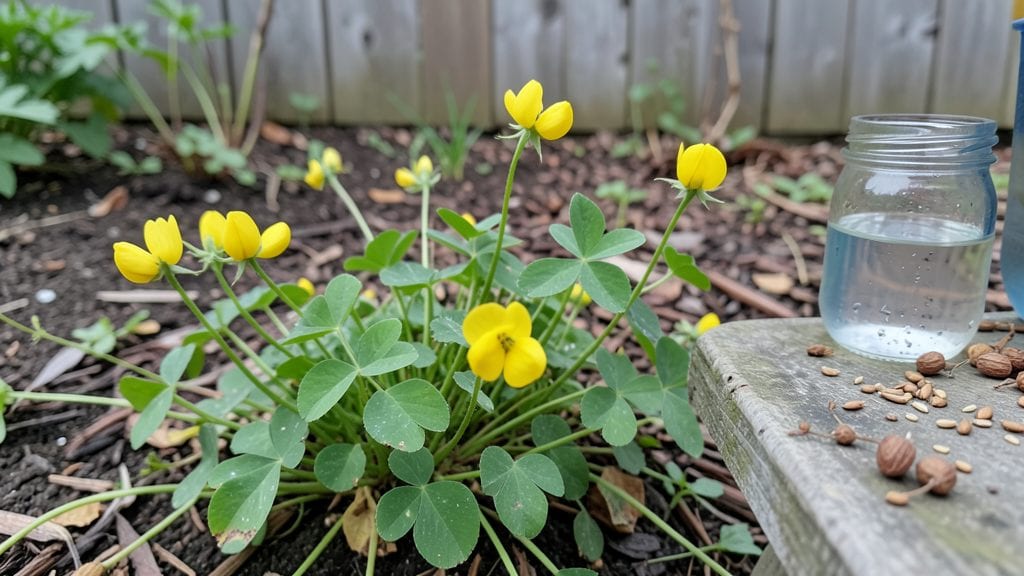
When seeds float in water, they're usually not viable or are dormant, since healthy seeds tend to sink due to their stored energy and density. This quick test helps gardeners evaluate seed quality before planting, though some aquatic plants like orchids or water lilies naturally float.
This simple water test works because healthy seeds contain starch and moisture, making them denser than water. 💫 Empty or damaged seeds, however, are often hollow or filled with air, causing them to bob to the surface.
Think of it like a buoyancy check—if it floats, it’s likely not ready to sprout. That said, some seeds (like those from aquatic plants) are biologically designed to disperse this way, so always consider the plant type before dismissing them entirely.
For gardeners, this method is a great first step, but it’s not foolproof. Seeds that float might still germinate under perfect conditions, while some sinkers could be old or damaged. I always recommend pairing the float test with a paper towel germination check for the most accurate results.
💡 In This Article
- Why Do Most Seeds Sink in Water?
- Testing Seed Viability Beyond the Float Test
Why do most seeds sink in water?
Healthy seeds sink because their internal composition creates a density greater than water. The key factor is their starch content—typically around 20-30% of a seed's dry weight—which acts like a natural ballast. When you drop a seed in water, this starch absorbs moisture and swells, increasing its weight per volume.
Think of it like a sponge that gets heavier when wet: the seed's structure is designed to hold onto water, making it denser than the surrounding liquid.
This buoyancy difference becomes obvious when comparing a full seed (like a tomato or bean) to an empty one. A viable seed contains stored energy reserves—starches, oils, and proteins—that give it a solid, compact form.
An empty seed, however, might have lost its endosperm (the food supply for the embryo) or been damaged during storage, leaving it filled with air instead. That air creates buoyancy, making it float like a cork in water.
The density difference is dramatic: a healthy tomato seed weighs about 0.05 grams, while an empty one might weigh half that but occupy the same space.
There's also the role of the seed coat's permeability. Healthy seeds have semi-permeable coats that allow moisture to enter gradually, helping them maintain their density. Damaged seeds, though, often have compromised coats that let air pockets form inside—like a punctured balloon that can't hold its shape.
This air displacement is what makes them bob to the surface. The science here mirrors how ships stay afloat: their hollow interiors displace water, creating buoyancy. In seeds, that "interior" is either packed with energy reserves or filled with air.
Not all seeds follow this rule, though. Aquatic plants like the water hyacinth or lotus have evolved to disperse their seeds via floating. Their seeds contain fibrous, air-filled chambers that keep them buoyant for dispersal by water currents.
These seeds might weigh just 0.01-0.03 grams but have a much larger surface area relative to their weight. In contrast, land-based seeds like corn or sunflower have dense, heavy endosperms that anchor them to the soil—literally and figuratively.
The difference is like comparing a lead weight to a hollow plastic ball.
Even among land plants, exceptions exist. Some orchid seeds are so light and fibrous they naturally float, while others (like those from the water lily) develop air bladders to stay afloat until conditions are right for germination.
These adaptations highlight how seed buoyancy isn't just about viability—it's also about survival strategy. For gardeners, this means the float test works best for traditional crops like beans or tomatoes, but aquatic or epiphytic plants might defy the rules entirely. Always consider the plant's natural habitat when interpreting results.
The float test's reliability also depends on seed size. Larger seeds (like peanut or sunflower) have more mass, making them sink even if slightly damaged.
Smaller seeds (like carrot or lettuce) are more prone to floating because their lighter weight means even small air pockets can overcome their density. This is why the test works better for certain crops than others—it's not a one-size-fits-all solution.
For maximum accuracy, pair it with a germination test to confirm viability.