
Vegetables
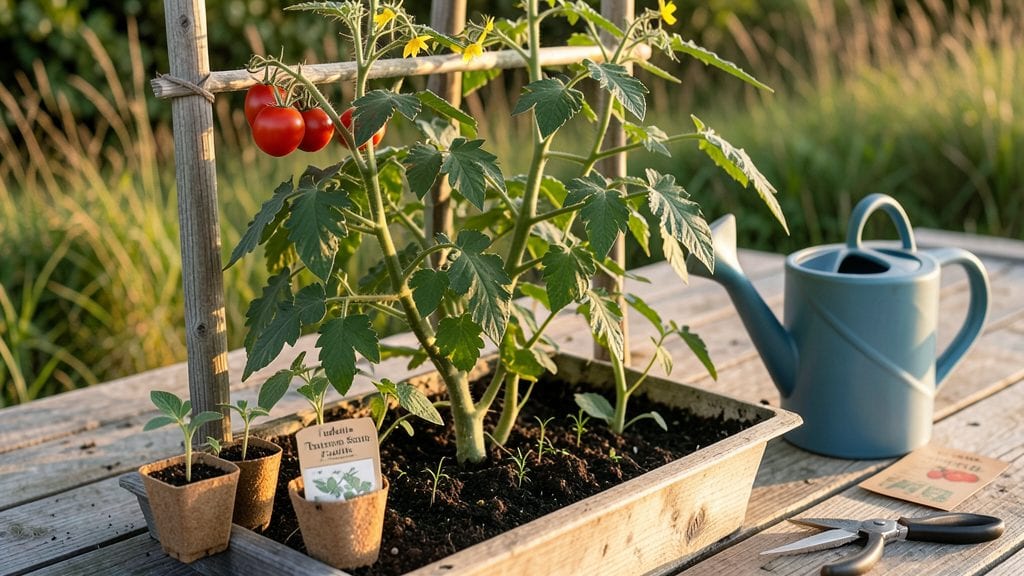
Growing Federle tomato seeds gives you a cold-hardy plant that keeps producing even when summer heat waves hit. 🌱 I learned the hard way last year—planting regular tomatoes too early led to stunted growth, but my Federles thrived in 50-degree soil, outlasting every other variety in my garden.
The secret lies in their genetics: bred for early starts and consistent fruit set, these tomatoes handle cool nights better than most. You’ll need well-draining soil mixed with compost, 6-8 hours of sunlight daily, and a sturdy cage or stakes since plants grow 4-5 feet tall.
The first true leaves appear in about 7-10 days after germination, and you’ll see blossoms by mid-June if planted early.
What makes Federles special is their flavor—sweet with just a hint of tartness—and their ability to produce heavy yields even under stress. My plants gave me 20+ pounds of tomatoes per plant last season, with fruit ripening steadily from July through September.
The key is consistent watering (1-1.5 inches per week) and avoiding overhead watering to prevent disease.
Perfect for gardeners in cooler climates or those who want reliable harvests without fuss. Whether you’re a beginner or a seasoned grower, this variety delivers results you can count on—even if your summer isn’t the hottest. Let’s get those seeds started right!
📚 In This Guide
- What you need
- Instructions
- Tips and common mistakes
- Wrapping up and next steps
What you need
- ● Federle tomato seeds – 1 pack (contains ~20-30 seeds)
- ● Seed-starting trays or biodegradable pots – 12-24 cell trays (2-3 inches deep) or 3-inch pots
- ● High-quality seed-starting mix – 1 bag (sterilized, well-draining blend)
- ○ Grow lights or sunny windowsill – 12-16 hours of light daily (optional but recommended)
- ● Misting bottle or spray nozzle – For gentle watering
- ● Fertilizer (balanced, 5-10-5 or organic) – 1 small bottle (for seedlings)
- ● Transplanting pots or garden space – 5-gallon containers or 18-24 inches of row space per plant
- ● Sturdy stakes or cages – 6-8 feet tall (for indeterminate growth)
- ● Heating mat – For faster germination (70-80°F ideal)
- ● Humidity dome or plastic wrap – To retain moisture during germination
- ● pH test kit – To monitor soil acidity (6.0-6.8 is perfect for tomatoes)
- ● Compost or worm castings – For nutrient-rich soil amendments
- ● Row covers or frost cloth – If planting early in cool climates
Step-by-step guide to growing Federle tomato seeds
Here's how I grow this cold-hardy variety—strong seedlings that thrive even in cooler climates.
🌱 Step 1: Select Containers and Prepare Seed Starting Mix
Use 4 individual 2-inch deep cells (one per seedling) filled with sterile seed-starting mix. I avoid garden soil—it's too dense and can harbor diseases that weaken young plants. Moisten the mix until it feels like a wrung-out sponge: damp but not dripping. Press it down lightly so the surface is firm enough to support tiny roots.
Federle tomatoes germinate best in warm soil, so I place the containers on a seedling heat mat set to 75-80°F. This small investment speeds up germination from 7-14 days to just 5-7 days. Without heat, germination can stretch to 2-3 weeks, leaving seedlings vulnerable to damping-off.
🌱 Step 2: Sow Seeds at Proper Depth and Moisture
Plant 1 seed per cell at a depth of ¼ inch—just enough to cover the seed but not bury it too deep. I use my finger to make a small hole, drop in the seed, then cover with a tiny pinch of soil. Mist the surface with a spray bottle until the soil looks uniformly damp but not wet.
Here's the thing—Federle seeds are large, so I don't crowd them. Planting two per cell wastes space and creates competition. Cover the tray with a clear plastic dome to retain moisture and warmth. Check daily for condensation on the dome—this tells me the humidity level is perfect.
☀️ Step 3: Provide Light and Prevent Leggy Growth
The instant seedlings emerge, move them under a full-spectrum grow light positioned 2-3 inches above the plants. Federle tomatoes need 14-16 hours of light daily to grow strong. Without enough light, they'll stretch toward the source, creating weak stems that snap easily.
Watch for first true leaves (the second set after the initial seed leaves). This is your cue to start rotating the tray quarter-turn daily so plants grow straight. You'll see leggy growth as long, thin stems with leaves spaced far apart—this is your warning to lower the light or add more hours.
💧 Step 4: Water and Fertilize for Strong Starts
Water from below by placing the tray in ½ inch of water for 10-15 minutes. This prevents soil from splashing on leaves, reducing disease risk. Let the seedlings drain completely before returning them to their tray. You'll know they're ready when the top inch of soil feels dry to the touch.
After 2-3 weeks, when seedlings have 2 sets of true leaves, feed them with a diluted fish emulsion fertilizer (mix 1 tablespoon per gallon of water). Federle tomatoes are heavy feeders, so I repeat this every 2 weeks until transplanting. Over-fertilizing now leads to lush foliage but weak stems.
🪴 Step 5: Harden Off and Transplant
Two weeks before your last frost date, start hardening off by placing seedlings outside in a sheltered spot for 1 hour daily. Gradually increase time over 7-10 days, ending with full sun exposure. Federle tomatoes tolerate cooler temps, but sudden cold snaps can still stress them—watch for wilting as your signal to bring them in.
Transplant on an overcast day to reduce shock. Bury seedlings deeper than usual—up to the first true leaves—to encourage strong root systems. Space plants 24-36 inches apart in rows 3 feet apart to allow airflow and prevent disease. You'll see robust growth within 2 weeks if everything goes right.
Tips & tricks for growing Federle tomato seeds
A few key strategies will help you grow robust Federle tomato seedlings that thrive from start to finish.
Heat Mat Timing: Place your seedling heat mat at 75-80°F right after sowing to trigger germination. I keep it on continuously until seeds sprout—usually 5-7 days with the heat mat versus 2-3 weeks without. Once seedlings emerge, you can remove the heat mat to save energy.
Light Positioning: Maintain that 2-3 inch distance between your grow lights and seedlings—closer than 2 inches can scorch tender leaves, while farther than 3 inches leads to leggy growth. I adjust the height weekly as seedlings grow. The 14-16 hours of daily light is non-negotiable for Federle's strong stem development.
Fertilizer Precision: That 1 tablespoon per gallon fish emulsion ratio is perfect for Federle's heavy-feeding nature, but timing matters. I wait until seedlings have 2 sets of true leaves (around 2-3 weeks) before fertilizing. After that, feed every 2 weeks—no more, no less. Over-fertilizing now creates weak stems that can't support heavy fruit later.
Transplanting Depth: Bury seedlings deeper than usual—up to the first true leaves—when transplanting. This encourages strong root systems that can handle Federle's heavy fruit load. The 24-36 inch spacing between plants might seem generous, but it prevents disease by allowing airflow. You'll thank me when your plants mature without fungal issues.
Pro Tips for Federle Tomato Seeds
- A few key strategies will help you grow robust Federle tomato seedlings that thrive from start to finish.
- Heat Mat Timing: Place your seedling heat mat at 75-80°F right after sowing to trigger germination.
- Light Positioning: Maintain that 2-3 inch distance between your grow lights and seedlings—closer than 2 inches can scorch tender leaves, while farther than 3 inches leads to leggy growth.
Frequently asked questions
Got questions about growing Federle tomato seeds?
You’re not alone! Here are answers to the most common queries to help you grow a thriving, cold-resistant harvest.
How cold can Federle tomato plants tolerate?
The Federle variety is known for its cold resistance, but it’s not frost-proof. Seedlings can handle light frosts (down to 28°F/-2°C) for short periods, while mature plants thrive in 50–85°F (10–29°C). Always protect young plants with row covers or cloches in early spring or late fall to extend the growing season.
When is the best time to plant Federle tomato seeds?
Start seeds indoors 6–8 weeks before the last frost date (typically March–April in most climates). Transplant seedlings after soil warms to 60°F (15°C) and nighttime temps stay above 50°F (10°C). For cooler regions, opt for early spring or late summer planting to avoid heat stress.
Do Federle tomatoes need staking, or can they grow bush-style?
While Federle tomatoes are indeterminate (vining), they benefit from support—especially in windy or rainy climates. Use cages, stakes, or trellises to prevent sprawling and improve airflow, reducing disease risk. If space is limited, prune suckers to encourage upward growth.
Why aren’t my Federle tomatoes ripening fully?
Incomplete ripening often stems from cool nights, insufficient sunlight, or overcrowding. Ensure plants get 6+ hours of direct sun daily and thin seedlings to 18–24 inches apart. For late-season plants, pick green tomatoes and ripen indoors with a paper bag + banana to speed up the process.
Can I save seeds from Federle tomatoes for next year?
Yes! Federle is an open-pollinated variety, so you can save seeds. Scoop gel from ripe tomatoes, ferment in water for 2–3 days, rinse, and dry on a screen. Store seeds in a cool, dark place for up to 3 years. Pro tip: Label seed packets to avoid mix-ups!
What’s the best companion plant for Federle tomatoes?
Pair Federle tomatoes with basil, marigolds, or onions to deter pests and boost flavor. Avoid planting near potatoes, fennel, or brinjals, as they compete for nutrients or attract harmful insects. Interplanting with lettuce or spinach also maximizes garden space!
Wrapping up and next steps
Growing Federle tomato seeds opens the door to a bountiful, cold-hardy harvest that’s perfect for gardeners in cooler climates or those craving early-season tomatoes! 🌱 With their heavy-fruited, disease-resistant traits, these seeds are a game-changer for both beginners and seasoned growers.
Whether you’re dreaming of fresh salads, sauces, or sun-ripened snacks, your journey starts with just a pinch of patience and a little soil.
Ready to plant your future harvest? Grab your Federle seeds, prep your garden (or containers!), and watch your tomato dreams take root—literally. Start sowing today and enjoy the sweet rewards of your hard work! 🍅✨