
Propagation
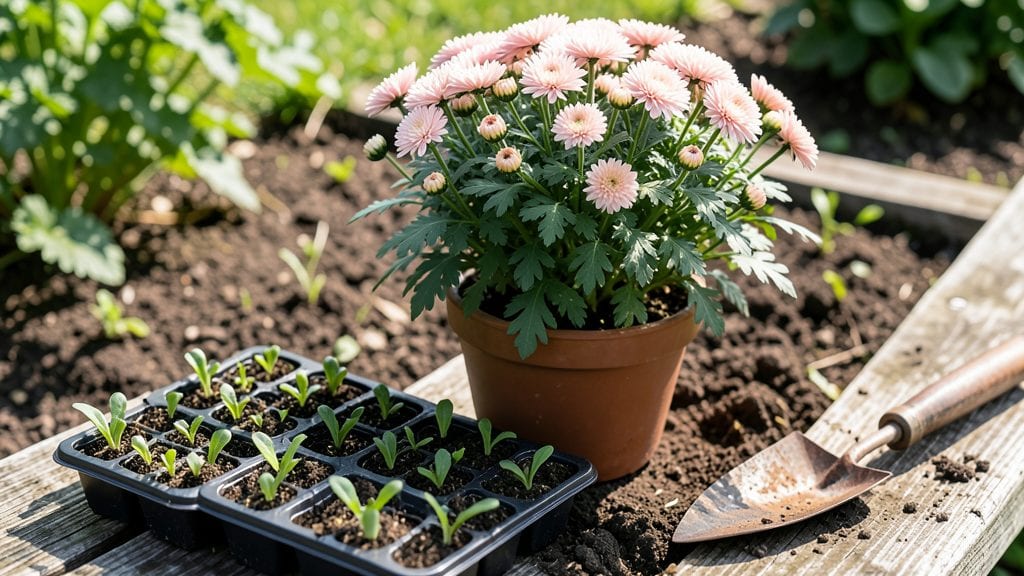
Growing chrysanthemums from seed gives you hundreds of varieties—not just the grocery-store types—with blooms that last from summer through frost. 🌼 I’ve started them indoors every spring, and the secret isn’t fancy equipment but timing: seeds need consistent 65°F soil and 14+ hours of light to germinate reliably.
Most people rush this step, leading to leggy seedlings that flop when transplanted.
The real magic happens in the first 6-8 weeks after germination. Use lightweight potting mix (no heavy garden soil) and keep seedlings in a sunny window or under grow lights.
Overcrowding is the #1 killer—thin to 2 inches apart once they have two true leaves, or you’ll spend summer untangling roots. I lost my first batch to damping-off because I watered from above; now I use a spray bottle for gentle moisture.
By late spring, your hardened-off seedlings will be stocky and dark green, ready to handle cooler outdoor temps. Plant them in full sun with well-draining soil, and watch for blooms 8-10 weeks later—long after store-bought plants have faded.
The key? Pinch back the tips when they’re 6 inches tall to encourage bushier growth and more flowers.
This method works for both hardy and tender varieties, whether you’re in Zone 5 or 9. The only trick is starting early enough—chrysanthemums need long daylight periods to flower, so don’t wait until spring to sow. With these steps, you’ll have cutting garden-worthy blooms that last well into winter.
📚 In This Guide
- What you need
- Instructions
- Tips and common mistakes
- Wrapping up and next steps
What you need
- ● Chrysanthemum seeds: Choose heirloom or hybrid varieties (e.g., 'Bonanza,' 'Dynasity,' or 'Koreana' for cold hardiness).
- ● Quantity: 10–20 seeds (enough for small pots or a seed tray).
- ● Seed-starting containers: Small cell packs (72–200 cells) or 4–6" biodegradable pots (for transplanting).
- ● Quantity: 1–2 containers (one per 10–15 seeds).
- ● High-quality seed-starting mix: Lightweight, sterile potting mix with perlite or vermiculite (avoid garden soil).
- ● Quantity: 1–2 cubic feet (enough to fill containers).
- ● Grow lights or sunny windowsill: LED grow lights (12–16 hours/day) or a south-facing window (6+ hours of sunlight).
- ● Misting bottle or spray nozzle: For gentle watering to avoid disturbing seeds.
- ● Plastic wrap or humidity dome: To retain moisture during germination.
- ○ Small fan (optional but helpful): For light airflow to prevent damping-off disease.
- ● Warmth: Chrysanthemum seeds germinate best at 65–75°F (18–24°C). Use a heat mat if needed.
- ● Patience: Germination takes 7–21 days (some varieties are slower!).
- ● Outdoor space (later stage): Full sun (6+ hours/day) for mature plants.
- ● Well-draining soil (amend with compost if needed).
- ● Fertilizer: Balanced liquid fertilizer (5-10-5) for seedlings (dilute to half-strength).
- ● Garden twine & stakes: For supporting tall varieties (e.g., 'Koreana').
- ● Thermometer/hygrometer: To monitor temperature and humidity.
- ● Cold frame or greenhouse: For extending the growing season in colder climates.
Step-by-step instructions for growing chrysanthemums from seed
Here’s my foolproof method for coaxing vibrant chrysanthemums from tiny seeds—no fancy equipment needed.
🌱 Step 1: Stratify Seeds for Faster Germination
Chrysanthemum seeds need a cold treatment to break dormancy. Place the seeds between two damp paper towels, fold them, and seal in a plastic bag. Refrigerate for 14-21 days—this mimics winter’s chill and triggers germination. Check weekly to ensure the towels stay moist but not soggy.
After cold treatment, plant seeds ¼ inch deep in a sterile seed-starting mix (never garden soil—it’s too dense). Use small pots or a seed tray with drainage holes to prevent root rot. I like to label each pot with the variety and date—chrysanthemums take 10-14 days to sprout, and patience pays off.
💧 Step 2: Provide Warmth and Consistent Moisture
Keep the soil at a steady 65-70°F using a seedling heat mat if needed. Chrysanthemums germinate best in warmth, but avoid letting the soil exceed 75°F—it can cause damping-off, a fungal disease that collapses seedlings overnight.
Water gently with a spray bottle to keep the soil evenly moist but not waterlogged. A good rule of thumb: the top ½ inch of soil should feel damp to the touch. Cover the tray with a clear plastic dome or plastic wrap to retain humidity, but remove it once seedlings emerge to prevent fungal growth.
☀️ Step 3: Move to Bright, Indirect Light
Once seedlings have 2-3 true leaves (the first set are cotyledons, not true leaves), transition them to a south-facing window or under grow lights for 14-16 hours daily. Chrysanthemums need plenty of light to avoid becoming leggy—thin, stretched stems that flop over.
If using natural light, rotate the pots a quarter turn daily so seedlings grow straight instead of leaning toward the window. You’ll know they’re getting enough light when the leaves are deep green and compact, not pale and sparse.
✂️ Step 4: Thin and Harden Off Seedlings
When seedlings are 3-4 inches tall, thin them to the strongest 2-3 per pot by snipping the weaker stems at soil level. This prevents overcrowding and ensures each plant gets enough nutrients. Transplant thinned seedlings into 4-inch pots with fresh potting mix to give them room to grow.
Start hardening off 2 weeks before the last frost by placing seedlings outside in partial shade for 1-2 hours the first day. Gradually increase exposure over 10-14 days, ending with full sun. Chrysanthemums are cold-hardy but need this adjustment to avoid shock.
🌿 Step 5: Plant Outdoors and Maintain for Year-Round Blooms
Transplant seedlings 12-18 inches apart in well-draining soil with full sun to partial shade. Chrysanthemums thrive in USDA Zones 5-9, but in colder climates, dig up containers and store them in a cool, dark place (like a garage) over winter. Resume care in early spring.
Fertilize every 4-6 weeks with a balanced, slow-release fertilizer to encourage bushy growth and abundant blooms. Deadhead spent flowers regularly to prolong the blooming season—this redirects energy from seed production to new buds.
Tips & tricks for perfect chrysanthemum seed starting
These game-changing strategies will help you bypass the most common pitfalls when growing chrysanthemums from seed—because even the most patient gardeners hit snags with these finicky flowers.
The Stratification Secret: Don't skip the 14-21 day cold treatment—this is non-negotiable for chrysanthemum seeds. I've tried planting them directly, and they either take months to germinate or never sprout at all. Place a damp paper towel with seeds between two layers of paper towels in a sealed bag, then store in the crisper drawer of your fridge for consistent 35-40°F temperatures. This mimics natural winter conditions and triggers germination hormones.
Soil Temperature Matters: Maintaining that 65-70°F range during germination is more critical than most seed-starting guides admit. Use a seedling heat mat if your home runs cooler, but never let soil exceed 75°F—this is where damping-off fungus strikes. I've lost entire trays of seedlings because I ignored this upper limit. A simple soil thermometer (under $10) prevents this heartbreak by giving you real-time readings.
Lighting Strategy: The 14-16 hours of daily light in Step 3 isn't just about duration—it's about quality. Natural south-facing windows work, but most homes don't get enough bright light, especially in winter. If you're using grow lights, position them just 2-3 inches above seedlings (closer than you think!) and use full-spectrum bulbs. I've seen seedlings stretch into leggy monsters when I placed lights too far away—this is your visual cue that they're light-deprived.
Harden Off Gradually: That 2-week hardening period before last frost is where many gardeners rush and end up with shock-prone plants. Start with just 1-2 hours of partial shade on day one, then increase by 30 minutes daily. By day 10, they should handle 6-8 hours of morning sun. I've learned this the hard way—plants hardened off too quickly wilt dramatically when transplanted outdoors, even if they look healthy.
Pro Tips for Chrysanthemum From Seed
- These game-changing strategies will help you bypass the most common pitfalls when growing chrysanthemums from seed—because even the most patient gardeners hit snags with these finicky flowers.
- The Stratification Secret: Don't skip the 14-21 day cold treatment—this is non-negotiable for chrysanthemum seeds.
- Soil Temperature Matters: Maintaining that 65-70°F range during germination is more critical than most seed-starting guides admit.
Frequently asked questions
Got questions about growing chrysanthemums from seed? You’re not alone! Here are some of the most common concerns—and their solutions—to help you succeed with this vibrant, low-maintenance plant.
How long does it take for chrysanthemum seeds to germinate?
Chrysanthemum seeds typically take 14 to 30 days to germinate, depending on temperature and moisture. Start seeds indoors 8 to 10 weeks before your last frost in a warm (65–75°F) environment. Patience is key—consistent warmth and indirect light speed up the process!
Can I grow chrysanthemums from seed outdoors directly?
While possible, direct sowing outdoors isn’t ideal for chrysanthemums. Seeds need warmth to germinate, and cool soil can delay or prevent sprouting. Instead, start seeds indoors or in a greenhouse, then transplant seedlings outdoors after the last frost when soil temps are stable.
Why aren’t my chrysanthemum seedlings growing tall?
Slow growth often stems from lack of light, overcrowding, or cool temps. Ensure seedlings get 12–14 hours of light daily (use grow lights if needed) and thin them to 12–18 inches apart once true leaves appear. If growth stalls, check for pests like aphids or fungal issues.
Do chrysanthemums need special care in winter?
Most chrysanthemums are hardy perennials (zones 5–9), but young plants or tender varieties may need protection. Mulch heavily with straw or leaves, and consider row covers or cloches in freezing climates. Prune back dead foliage in early spring to encourage new growth.
Can I save seeds from store-bought chrysanthemums?
Probably not! Most commercial chrysanthemums are hybrids bred for specific traits (like color or bloom time) and won’t produce true-to-type seeds. For reliable seeds, buy from reputable seed suppliers or save seeds from heirloom varieties.
What’s the best way to overwinter chrysanthemums?
For year-round blooms, cut back plants in fall, apply a thick layer of mulch (4–6 inches), and cover with burlap or frost cloth in extreme cold. In pots, move plants to a cool, dark garage or basement (40–50°F) and water sparingly. Resume care in spring!
Wrapping up and next steps
Growing chrysanthemums from seed is a rewarding journey that brings vibrant color to your garden with minimal winter fuss! 🌸 With the right soil, light, and care, you’ll enjoy stunning blooms year after year—even in colder months.
Start small, stay patient, and soon you’ll be proudly showcasing your thriving chrysanthemums.
Ready to take the next step? Pick your favorite variety, gather your supplies, and dive in—your garden’s next masterpiece is just a seed away! 🌱