
Propagation
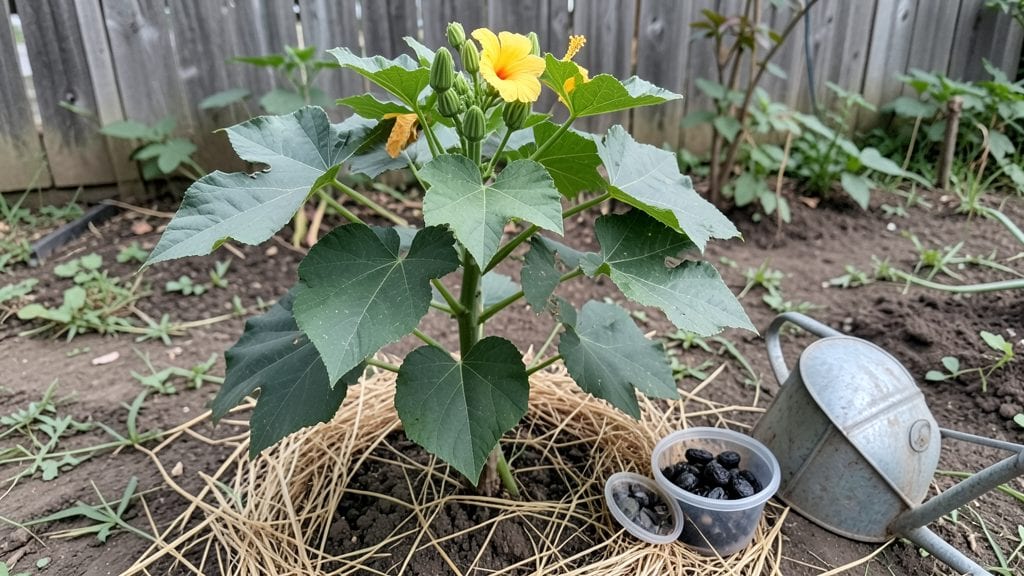
Soaking okra seeds in warm water cuts germination time from weeks to days—my first batch sprouted in just 48 hours after a simple overnight soak. 🌱 The hard outer shell that normally resists moisture softens, letting roots break through faster while reducing the risk of mold that plagues dry-started seeds.
I used this method after struggling with slow germination in my hot, humid climate, and it became my go-to trick for getting seedlings off to a running start.
All you need is a bowl, warm (not boiling) water, and a clean towel or paper towels. Fill the bowl with water heated to about 100°F—just warm enough to feel comfortable in a sink—and drop in your seeds for 8-12 hours.
The goal isn’t to cook them but to hydrate the seed coat so roots can emerge without fighting resistance. I like to soak mine overnight for consistency, then drain and wrap them in the damp towel to keep moisture levels steady until planting.
After soaking, you’ll notice the seeds swell slightly and develop tiny white roots within hours. Plant them ½ inch deep in well-draining soil, keeping it warm (above 70°F) to maintain the momentum.
Seedlings typically emerge in 3-5 days, and you’ll avoid that frustrating wait of weeks where nothing happens. The payoff? Stronger, more uniform plants that start producing pods 2-3 weeks earlier than traditional methods.
This method works especially well in hot climates where soil stays warm naturally, but even cooler zones benefit from the jumpstart. Just avoid soaking too long—beyond 12 hours risks over-hydration and rot.
The key is patience during the soak and warmth afterward. Once you try it, you’ll wonder why you didn’t start sooner!
📚 In This Guide
- What you need
- Instructions
- Tips and common mistakes
- Wrapping up and next steps
What you need
- ● Okra seeds: 10–20 fresh, high-quality seeds (check the packet for germination rates).
- ● Warm water: 1 cup (240 mL) of water, heated to 100–110°F (38–43°C)—lukewarm, not scalding!
- ● Container: A small bowl, jar, or glass (6–8 oz) with a lid or plate to cover it.
- ● Colander or strainer: For rinsing seeds post-soak.
- ● Paper towels or clean cloth: 2–3 sheets (unbleached, if possible).
- ○ Plastic bag or ziplock: Optional but helpful for humidity control during germination.
- ○ Thermometer: Optional but useful for precise water temperature checks.
- ● Spray bottle: For lightly misting seeds if using the towel method.
- ● Growing medium: Seed-starting mix or coconut coir (ready for transplanting after soaking).
- ● Planting pots: Small biodegradable pots or trays (2–3 inches deep) for post-soak sowing.
- ● Label & marker: To track seed varieties and soak dates.
- ● A warm, well-lit spot (70–80°F / 21–27°C) for soaking and germination.
- ● Patience! Soaking takes 6–12 hours, and germination can take 5–14 days.
- ● Clean hands and a sanitized workspace to avoid contamination.
How to soak okra seeds for faster germination
Here's my foolproof method for breaking through okra's tough seed coat and getting strong seedlings in days.
🌱 Step 1: Gather and Prepare the Seeds
Start with fresh okra seeds—they germinate best when less than a year old. I like to spread them on a clean paper towel and inspect each one for cracks or damage. Discard any that look shriveled or discolored, as they won't sprout. For 4 servings, you'll need about 40-50 seeds—okra seeds are small but pack a punch.
Real talk: if you're working with store-bought seeds, they're usually pre-treated for germination, but a soak still helps. Just skip the longer soak times and use warm water for 4-6 hours instead. The goal here is to soften that tough outer shell so the seedling can break through faster.
💧 Step 2: Soak in Warm Water for 12-24 Hours
Fill a clean bowl with warm water—not boiling, just comfortably warm to the touch. Drop the seeds into the water and let them soak for 12-24 hours. You'll see them plump up and look slightly larger after a few hours—that's your signal the process is working. Stir them gently once or twice to prevent any from sticking to the bottom.
I know it seems weird to leave them so long, but okra seeds have a naturally thick coat that slows germination. The soak mimics natural rainfall and softens the shell, so the seedling can emerge faster. After 12 hours, check them—if they're still hard, give them another 6-12 hours. Over-soaking won't hurt, but don't let them dry out during the process.
☀️ Step 3: Plant the Soaked Seeds in Warm Soil
While the seeds soak, prepare your planting area. Okra loves warmth, so aim for soil temperatures of at least 70°F. If you're starting indoors, use a heat mat to keep the soil warm. Plant the soaked seeds ½ inch deep in well-draining soil—okra hates soggy roots, so mix in some perlite or sand if your soil is heavy.
I like to plant them in small clusters of 3-4 seeds per spot since okra seedlings can be delicate. Water gently after planting to settle the soil, but don't drench it. The goal is to keep the soil moist but not waterlogged. You'll see tiny sprouts in as little as 3-5 days—that's the magic of the soak!
⏰ Step 4: Monitor for Sprouting and Provide Warmth
Keep the soil warm and moist until germination. A clear plastic dome or even a plastic bag over the pot helps trap heat and humidity. Check daily for sprouts—you'll spot them as tiny green tips pushing through the soil. Once they emerge, remove the dome immediately to prevent fungal issues. Okra seedlings grow fast, so they won't need the extra humidity for long.
Here's the thing—okra seedlings are sensitive to cold. If your home runs cool, consider using a seedling heat mat or placing the pot on top of your refrigerator (not inside—just on top). You'll see strong, stocky seedlings in no time, and they'll be ready to transplant outdoors when nighttime temperatures stay above 55°F.
🌿 Step 5: Thin Seedlings and Harden Off
Once seedlings reach 2-3 inches tall, thin them to the strongest one per cluster. Use small scissors to snip the extras at soil level—this prevents disturbing the roots of the plants you're keeping. Okra grows quickly, so don't wait too long to thin. You'll want to give each plant plenty of space to spread out, ideally 12-18 inches apart.
Before transplanting outdoors, harden off the seedlings by placing them in a sheltered spot for 1-2 hours the first day, gradually increasing their time outside over 5-7 days. This helps them adjust to outdoor conditions without shock. Once they're hardened off, they're ready to thrive in your garden or containers.
Tips & tricks for soaking okra seeds
Breaking through okra's tough seed coat doesn't have to be a guessing game—these tricks will help you achieve faster, more reliable germination every time.
Seed Selection Matters: In Step 1, when inspecting your seeds, look for ones that are plump and uniformly colored. Avoid any with dark spots or cracks, as these won't sprout well. I've found that seeds from fresh pods (less than a year old) germinate best—if you're working with older seeds, soak them for the full 12-24 hours as their coats are thicker. The extra time helps break down that stubborn outer layer.
Warm Water Technique: For Step 2, the temperature of your soaking water is crucial. Fill your bowl with water that's warm to the touch but not hot enough to feel uncomfortable—think bathwater temperature. I like to test it by dipping my wrist in. The warmth helps open the seed coat faster, but boiling water will kill the seeds. After 12 hours, check for plumping—if they're still hard, extend the soak to 24 hours.
Soil Temperature is Non-Negotiable: In Step 3, maintaining 70°F soil temperature is key for successful germination. If your home is cool, use a seedling heat mat underneath your pots. I've even placed containers on top of refrigerators (not inside!) to create a warm microclimate. Cold soil slows germination dramatically—you might wait weeks instead of days for those first green shoots.
Harden Off Gradually: When following Step 5, don't rush the hardening process. Start with just 1-2 hours on the first day and increase by 30 minutes each subsequent day. I've seen seedlings shocked by sudden temperature changes, which stunts their growth. A slow transition mimics natural outdoor conditions and gives your okra plants the best chance to thrive after transplanting.
Pro Tips for Soak Okra Seeds
- Breaking through okra's tough seed coat doesn't have to be a guessing game—these tricks will help you achieve faster, more reliable germination every time.
- Seed Selection Matters: In Step 1, when inspecting your seeds, look for ones that are plump and uniformly colored.
- Warm Water Technique: For Step 2, the temperature of your soaking water is crucial.
Frequently asked questions
Why should I soak okra seeds before planting?
Soaking okra seeds in warm water speeds up germination by softening the hard outer shell and activating enzymes that kickstart growth. This method can cut germination time from 2-3 weeks to just 5-7 days—perfect for impatient gardeners!
How long should I soak okra seeds for best results?
Soak seeds in warm water (80–90°F) for 12–24 hours. Check them periodically—they’re ready when the outer shell softens and a tiny white root (radicle) appears. Over-soaking (beyond 24 hours) can lead to mold or rotting, so drain and plant promptly.
Can I reuse the soaking water for multiple batches?
No, reuse isn’t recommended. The water becomes saturated with dissolved seed oils and microbes, which can inhibit germination in new seeds. Always use fresh, warm water for each batch to maximize success.
What if my seeds don’t sprout after soaking?
Try these troubleshooting steps:
- Check seed viability: Test a few seeds by scratching the shell—if it’s hard and dark inside, they may be old or stored improperly.
- Adjust water temp: Okra seeds thrive in warm (not boiling) water. Aim for 80–90°F.
- Soak longer: Extend soaking to 36 hours (with water changes every 12 hours) for stubborn seeds.
- Use a germination aid: Add a pinch of humic acid or apple cider vinegar to the soak water.
Are there alternatives to soaking okra seeds?
Yes! If soaking isn’t your style, try these methods:
- Scarification: Lightly sandpaper the seed coat to mimic natural wear and tear.
- Cold stratification (briefly): Place seeds in the fridge for 1–2 days before planting to break dormancy.
- Direct planting in heat: Sow seeds 1/2 inch deep in warm soil (70°F+) and keep moist—germination may still take longer.
Wrapping up and next steps
Soaking okra seeds in warm water is a simple yet powerful trick to boost germination speed and give your plants a head start! Whether you're a seasoned gardener or just starting out, this method saves time and effort while ensuring healthier seedlings.
Now that you’re armed with the know-how, why not try it with your next okra crop? Grab your seeds, a bowl of warm water, and let nature do the rest—your garden will thank you! 🌱✨
Next step: Experiment with different soaking times (4–12 hours) to see what works best for your climate. Happy growing!