Propagation
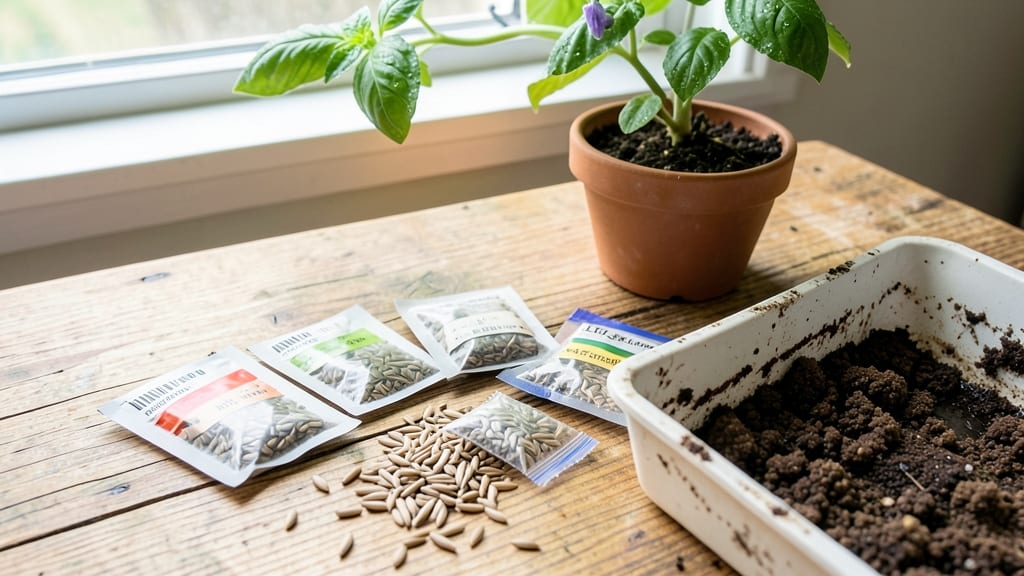
My seeds for life garden starts with a simple truth: every seed carries more than just the promise of flowers or food—it holds stories of resilience, beauty, and continuity. 🌱 This isn’t just about growing plants; it’s about weaving a legacy into the soil, one that thrives through seasons, even winter.
The key? Cold stratification, a natural trick that unlocks seeds dormant for months, ensuring blooms when others think the garden is asleep.
Here’s the magic: by mimicking nature’s timing, you turn winter’s chill into a catalyst for spring’s explosion of color. No fancy equipment needed—just a little patience and a fridge.
I’ve used this method to coax rare heirlooms and pollinator favorites into bloom months early, creating a garden that feels alive year-round. The payoff? A tapestry of flowers that feed bees, butterflies, and your soul long before summer arrives.
What you’ll end up with isn’t just a garden—it’s a living timeline. Imagine snowdrops pushing through frost in February, followed by peonies and roses in June, then late-blooming asters holding court as summer fades.
Each seed you plant becomes a chapter in a story that outlasts you, feeding future generations of plants—and the pollinators that depend on them.
Perfect for gardeners who want more than just a pretty plot—they want a thriving ecosystem that gives back. Whether you’re reviving an old family variety or introducing pollinator magnets, this approach turns every seed into a seed for life. Let’s get those seeds talking to winter.
The Science Behind Dormancy
Dormancy is nature’s way of ensuring survival—so why do some seeds need a cold treatment to break it? The answer lies in evolutionary adaptations and biochemical triggers that have shaped plant life for millennia.
Understanding these causes helps gardeners replicate the conditions seeds need to thrive. Here’s why cold stratification works—and why some seeds refuse to germinate without it.
Many wild plants evolved in temperate climates where harsh winters follow warm growing seasons. Seeds that germinated too early would face frost, starvation, or outcompete by stronger plants. To solve this, nature developed dormancy, a built-in pause that syncs germination with optimal conditions.
- Double Dormancy: Some seeds (like those from maples or apples) have two layers of dormancy: - Physiological dormancy: A biochemical block preventing germination. - Physical dormancy: A hard seed coat that resists water absorption.
Cold stratification weakens the seed coat and signals the plant to "wake up" when spring arrives.
- After-Ripening Requirement: Even if a seed is ripe, it may need additional time (weeks or months) to complete its maturation process. Cold stratification mimics the natural post-harvest chilling that occurs underground or in soil crevices.
Seeds produce growth hormones (like gibberellins) and inhibitors (like abscisic acid, ABA) that regulate germination. Cold stratification rebalances these hormones to tip the scales in favor of growth.
- ABA Breakdown: Abscisic acid keeps seeds dormant by blocking enzymes needed for sprouting.
Cold temperatures gradually degrade ABA, reducing its inhibitory effect. - Gibberellin Surge: Once ABA levels drop, gibberellins (growth-promoting hormones) increase, stimulating the production of α-amylase, an enzyme that breaks down starch into sugars—fuel for the seedling.
Pro Tip: 💡 Some seeds (like delphiniums or lupines) need moist cold stratification—simulating a winter rain-soaked soil. Others (like peonies) thrive with dry cold treatment, mimicking a buried seed in a frost-heaved bed.
A tough seed coat (like those in legumes, roses, or some herbs) acts as a barrier, preventing water and oxygen from reaching the embryo. Cold stratification weakens the coat through:
- Freeze-Thaw Cycles: Water inside the seed expands when frozen, micro-cracking the coat over time.
- Enzyme Activation: Cold temperatures activate pectinase enzymes, which break down the middle lamella (the "glue" holding seed coat cells together), making it more permeable.
Example: 🌿 Echinacea (coneflower) seeds often need 60–90 days of cold, moist treatment to soften their woody husks—without it, they may rot before germinating.
Some seeds are light-dependent or temperature-sensitive, meaning they won’t germinate unless exposed to specific conditions after stratification.
- Light-Germinators: Seeds like snapdragons or petunias need light to trigger germination post-stratification. If buried too deep after cold treatment, they may fail to sprout. - Thermal Time Accumulation: Many seeds require a minimum sum of temperatures (measured in growing degree days) to germinate.
Cold stratification provides this low-temperature "head start" before warmer soil conditions.
Warning: ⚠️ Over-stratifying can backfire! Some seeds (like tomatoes or peppers) may rot if kept cold too long after stratification. Monitor moisture and adjust timing based on seed type.
In the wild, seeds interact with soil microbes that influence germination. Cold stratification can stimulate beneficial fungi and bacteria that:
- Break down seed inhibitors naturally (e.g., mycorrhizal fungi in forest seeds).
- Supply nutrients to the embryo, signaling it’s safe to grow.
- Prevent pathogenic fungi from attacking weak seeds during dormancy.
Garden Hack: 🌱 For stubborn seeds (like trilliums or bloodroot), try stratifying in a mix of peat moss and sand—this mimics a forest floor’s microbial ecosystem.
Some seeds carry epigenetic markers—chemical tags on their DNA—that respond to environmental cues. Cold stratification can reset or activate these markers, ensuring the seedling grows under conditions similar to its ancestors.
- Short-Day vs. Long-Day Plants: Seeds from regions with short growing seasons (like alpine plants) may need cold to "remember" their native climate before sprouting.
- Polyploid Seeds: Some hybrid or polyploid plants (like heuchera or hostas) have extra chromosomes that require cold to stabilize before germination.
Fun Fact: 🌟 The Mammoth Tree (Sequoiadendron) seeds need 30–60 days of cold stratification—a remnant of their ancient Sierra Nevada habitat where snowpack regulated their life cycle.
Revive Dormant Seeds Naturally
Cold stratification may seem like a waiting game, but with the right approach, you can boost success rates and prevent common pitfalls—whether it’s mold, rot, or seeds that refuse to wake up.
Below, we break down practical fixes for each issue, paired with prevention tips to keep your seeds thriving year-round.
Cause: Insufficient cold exposure, improper moisture, or expired seeds. Solution:
- Extend the cold period by 2–4 weeks (some seeds, like trilliums, need up to 6 months).
- Check moisture levels—soil should feel like a damp sponge, not soggy. Use a spray bottle for even hydration.
- Test viability by cutting open a seed (if safe) or soaking a few in water for 24 hours. If they sink, they’re likely still good.
💡 Prevention Tip: Label seeds with stratification dates and store them in a cool, dry place (like a fridge) until ready to treat. For long-term storage, keep them in paper envelopes (not plastic) to avoid moisture buildup.
Cause: Excess moisture, poor airflow, or contaminated growing medium. Solution:
- Immediately remove moldy seeds and discard them to prevent spread.
- Repot healthy seeds in a fresh mix of perlite + peat moss (50/50) for better drainage.
- Add a fungal inhibitor like hydrogen peroxide (3%) to your watering mix (1 part peroxide to 10 parts water).
🌡️ Prevention Tip: Use sterilized potting mix (bake soil at 200°F for 30 minutes) and avoid overcrowding seeds in containers. A light misting (not soaking) keeps humidity high without inviting mold.
Cause: Overly warm stratification or improper medium (e.g., using garden soil instead of a sterile mix). Solution:
- Adjust temperatures—most seeds thrive at 35–45°F (2–7°C). Use a seed fridge or a DIY setup (like a Styrofoam cooler with a thermometer).
- Switch to a faster-draining mix like sand + coconut coir if rot is an issue.
- Plant deeper for large seeds (e.g., maple or oak) to protect the embryo from heat fluctuations.
✨ Prevention Tip: For heat-sensitive seeds, place your stratification container in the crisper drawer of your fridge (not the freezer!). Monitor temps weekly with a digital thermometer—consistency is key.
Cause: Incomplete stratification, wrong light conditions, or dormancy-breaking chemicals (like gibberellic acid) used incorrectly. Solution:
- Try a second stratification cycle if seeds are slow. Some species (like blueberries) need two winters in nature.
- Expose to light after stratification—many seeds (e.g., poppies) need 12+ hours of bright light to trigger germination.
- Use a heat mat (set to 70–75°F) once seeds are removed from cold to speed up metabolic activity.
🎯 Prevention Tip: Research your seed’s native climate—tropical seeds may need warm stratification (buried in sand at 70°F) instead of cold. Always match the natural dormancy cycle!
Need a fast reference? Bookmark this!
| Problem | Quick Fix | Prevention |
|---|---|---|
| No germination | Extend cold time + check moisture | Label seeds + test viability first |
| Mold/fungus | Repot in sterile mix + peroxide spray | Use sterilized soil + good airflow |
| Seeds rotting | Switch to sandy mix + shallow plant | Monitor moisture—damp, not wet |
| Slow sprouting | Add light + use heat mat | Research stratification needs beforehand |
Final Pro Tip: 🌱 Patience is part of the process! Some seeds (like lilacs or peonies) may take months to show signs of life. Keep records of your stratification experiments—what works for one batch might not for another. Happy growing!
Frequently asked questions
What makes certain seeds "seeds for life" rather than just regular seeds?
These seeds are chosen for their ecological impact and long-term viability. They include heirloom varieties, native plants, and pollinator favorites that support biodiversity. Unlike commercial hybrids, they're adapted to local climates and can be saved for future generations, creating a living legacy in your garden.
Can I use cold stratification with any type of seed?
No—cold stratification works best for perennial seeds, woody plants, and many wildflowers. Tropical seeds (like tomatoes or peppers) often need warm stratification instead. Always check seed packets for specific requirements, as some may need moist cold treatment while others prefer dry cold conditions.
How long should I keep seeds in cold stratification?
Most seeds need 60–90 days at 35–45°F (2–7°C), but some (like trilliums) require up to 6 months. Start monitoring after 4 weeks—if nothing happens, extend the period. Over-stratifying can cause rot, so never exceed 6 months unless specified for your seed type.
What's the best medium for cold stratification?
Use a moistened mix of peat moss and sand (or coconut coir) for most seeds. For large seeds (like maple or oak), bury them in a sandy soil mix. Avoid garden soil—it may contain pathogens. Keep the medium damp but not soggy to prevent mold while maintaining proper moisture levels.
Why should I care about preserving heirloom seeds?
Heirloom seeds represent genetic diversity that's disappearing from modern agriculture. They're often more resilient to pests, adapted to local conditions, and carry historical significance. By saving them, you help maintain food security and ecological balance—plus, they often produce more flavorful and nutritious plants than commercial varieties.