
Propagation
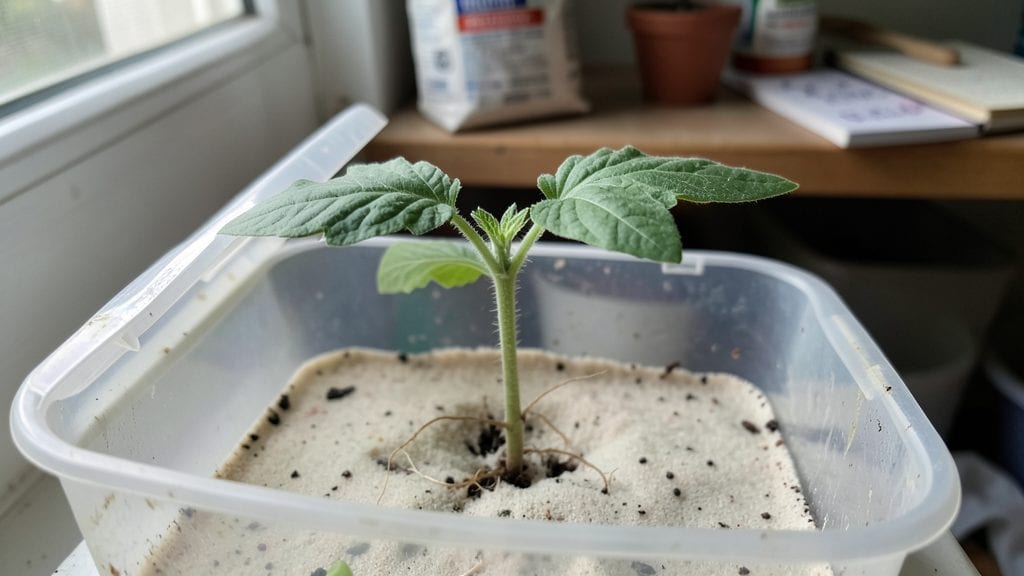
Germination is essentially the awakening of a seed's dormant life cycle.
When seeds absorb water, their internal enzymes break down stored nutrients—like starches and fats—into sugars that fuel rapid cell division. 🌱 This process kicks off when the embryo inside the seed detects the right mix of warmth (typically 65-85°F), moisture, and oxygen levels.
Unlike photosynthesis, which only starts after the seedling breaks through the soil, germination itself is all about tapping into those pre-loaded energy reserves.
What's fascinating is how different seeds have unique triggers—some need light to germinate (like lettuce seeds), while others sprout better in darkness (such as beans). Even the seed's physical structure plays a role: monocots like corn have a single cotyledon, while dicots like tomatoes develop two.
Understanding these nuances can mean the difference between a thriving garden and wasted effort.
💡 In This Article
- The Biological Process of Seed Germination
- Optimal Conditions for Successful Seed Germination
The biological process of seed germination
Here's what's actually happening when a seed germinates: the embryo inside activates through a complex biochemical cascade. First, water penetrates the seed coat, triggering enzymes like amylase to break down stored starches in the endosperm (the seed's food supply) into simple sugars that fuel cellular respiration.
This process generates energy (ATP) that powers the rapid division of meristematic cells in the root and shoot tips. The key factor is the balance between abscisic acid (which maintains dormancy) and gibberellins (which promote growth)—these hormones act like a biological switch, with gibberellins eventually overcoming abscisic acid's inhibitory effects.
The temperature threshold for germination typically ranges from 65-85°F, but this varies dramatically by species. For example, tomato seeds germinate best at 75-80°F, while lettuce seeds may require cooler conditions (60-68°F) to prevent bolting (premature flowering).
Moisture triggers the seed to swell by up to 50-100% of its original size, creating pressure that eventually cracks the seed coat. Oxygen is equally critical—without it, anaerobic respiration produces ethanol and lactic acid, which can kill the embryo.
This is why seeds planted too deeply often fail to sprout.
Monocot and dicot seeds follow different anatomical paths during germination. In monocots like corn, the first structure to emerge is the coleoptile (a protective sheath) that pushes through the soil, followed by the shoot. Dicots like beans develop two cotyledons (seed leaves) that store nutrients until the true leaves form.
What most people don't realize is that the hypocotyl (the stem below the cotyledons) often loops or bends to pull the cotyledons above ground—a process called epigeal germination—while monocots typically show hypogeal germination, where the cotyledons remain underground.
The seed's internal clock also plays a role through a process called thermoinhibition, where prolonged exposure to high temperatures (>95°F) can suppress germination. This explains why some seeds require a period of cold stratification (like apple seeds) to break dormancy.
The transition from dormancy to active growth involves the degradation of storage proteins and lipids, with the resulting amino acids and fatty acids being converted into sugars via gluconeogenesis—a metabolic pathway that essentially "builds" carbohydrates from scratch when light isn't yet available.
Consider these key differences in germination mechanics:
- Enzyme activation: α-amylase breaks down starches into maltose, while lipase converts fats into glycerol and fatty acids
- Hormonal control: Gibberellins induce aleurone layer cells to produce more enzymes, creating a positive feedback loop
- Physical changes: The radicle (embryonic root) emerges first, followed by the shoot—this polarity is controlled by auxin transport
Understanding these processes helps explain why some seeds sprout within days (like radishes) while others take weeks (like oak trees). The oak's long germination time is an evolutionary adaptation to ensure its seedlings establish in stable, long-term environments. 🌱